
Nose Breathing Benefits: How Nasal and Diaphragmatic Breathing Improve Health, Sleep, and Stress Control
Nose breathing is the most fundamental and healthy way to breathe. While it seems automatic, many people develop the habit of mouth breathing, which can have significant negative consequences on health. Making a conscious effort to breathe through your nose is a simple change that can dramatically improve your well-being, from filtering pathogens to optimizing oxygen exchange in your lungs.
In this guide, you’ll discover exactly why nose breathing benefits your entire body, learn the three types of breathing (and which one is best), and get a simple step-by-step practice to make diaphragmatic nose breathing a daily habit.
Why Nose Breathing Benefits Your Health
Your nose is a perfectly designed biological air filter. The advantages of nose breathing are extensive and backed by both ancient wisdom and modern science. Understanding these benefits is the first step toward transforming your respiratory health.
The Nose: Your Built-In Air Filtration System
The primary advantage of nose breathing is its filtration capability. Your nostrils are lined with tiny hairs (cilia) and mucous membranes that work together to:
Filter Impurities: Trap dust, allergens, pollen, and other environmental particles before they can enter your sensitive lungs.
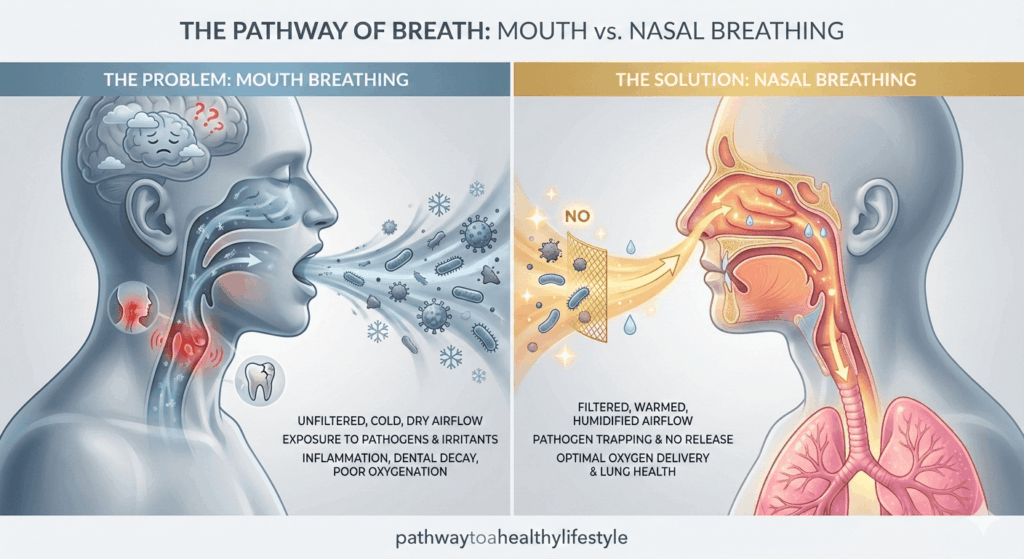
Warm and Humidify Air: Cold, dry air can irritate the respiratory tract. Your nose warms and moisturizes incoming air to body temperature, creating an ideal environment for your lungs.
Defend Against Illness: This filtration process is your first line of defense against airborne viruses and bacteria, reducing your risk of contracting contagious diseases and common colds.
Scientific research confirms that nasal breathing improves nitric oxide delivery, enhances oxygen uptake, and supports immune defense mechanisms.
Key Takeaway: Nose breathing benefits include filtering pathogens, optimizing oxygen uptake, regulating the nervous system, and protecting long-term respiratory health—making it superior to mouth breathing for daily life.
Why Avoid Mouth Breathing: The Hidden Dangers
Mouth breathing bypasses all of your body’s natural defensive systems. Instead of being filtered, warmed, and humidified, air enters your lungs raw, cold, and dirty. Understanding why avoid mouth breathing is crucial for protecting your health. This habit can lead to:
- A higher susceptibility to sore throats, coughs, and respiratory infections
- Dry mouth, which contributes to bad breath and dental issues like gum disease
- Poor sleep quality and snoring, as mouth breathing can disrupt airflow and oxygen delivery
- Altered facial development in children and reduced athletic performance in adults
According to research on nasal breathing, chronic mouth breathing can negatively impact craniofacial development and overall respiratory efficiency. While mouth breathing is necessary during intense athletic exertion, it should be the exception, not the rule. For better rest, explore our guide to building better sleep hygiene to complement your breathing improvements.
How to Develop the Nose Breathing Habit
For adults and children alike, developing the habit of nose breathing is crucial for maximizing nose breathing benefits. Here’s how to encourage it:
For Children: Gently encourage them to keep their mouths closed during rest and sleep. If congestion is an issue, gentle massage along the sides of the nose can help. Persistent congestion could be caused by adenoids, which a doctor can easily address.
For Everyone: A daily nasal rinse with a lukewarm saline solution (using a neti pot or simply sniffing water gently) can clear obstructions and keep nasal passages healthy. This simple practice enhances the advantages of nose breathing by maintaining clear airways.
The 3 Types of Breathing: Which One Do You Use?
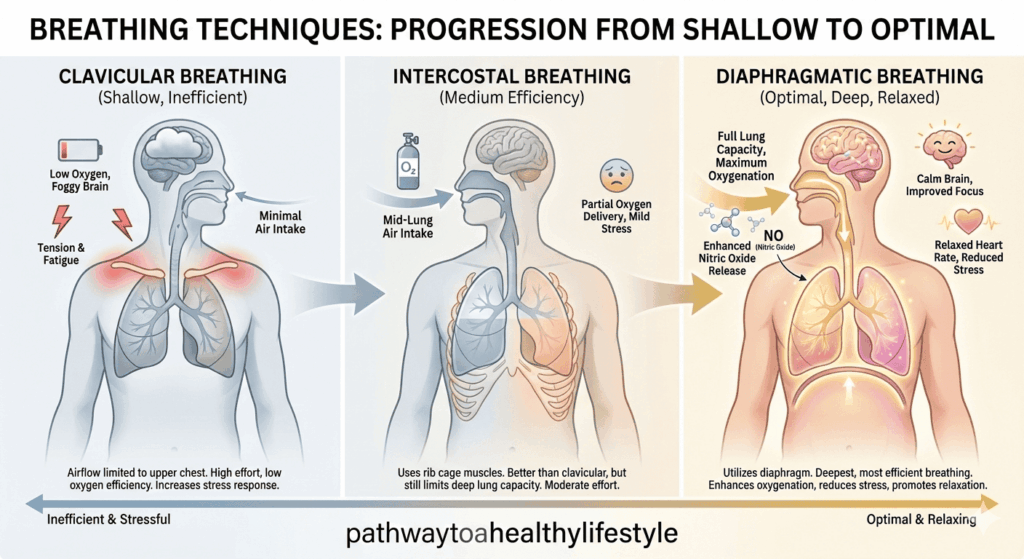
True nose breathing is most effective when combined with full, diaphragmatic breaths. Understanding why avoid mouth breathing also means understanding proper breathing mechanics. There are three primary breathing methods:
1. Clavicular (Collar-Bone) Breathing
This is the most shallow and inefficient type of breathing, often triggered by stress, poor posture, or restrictive clothing. Imagine someone gasping for air after a shock—that’s clavicular breathing.
How it Works: It involves raising the shoulders and collarbone to pull in a minimal amount of air, engaging only the very top lobes of the lungs.
The Problem: This method requires significant energy from accessory neck and shoulder muscles for minimal oxygen return. It’s like filling a bottle through a thin straw—you get a few drops at the top but leave the rest empty.
Impact on Health: This pattern creates a cycle of stress and fatigue. The body remains in a sympathetic (“fight-or-flight”) state because the shallow breaths signal danger. It leads to poor blood oxygenation, muscle tension in the neck and shoulders, and chronic fatigue. This completely negates the potential nose breathing benefits your body needs.
2. Intercostal (Chest) Breathing
This is the most common breathing pattern for adults. It’s an improvement but still far from optimal. Many people, particularly those who have worn restrictive garments, default to this mode.
How it Works: The intercostal muscles between the ribs expand the ribcage outward and upward, filling the middle portion of the lungs.
The Problem: While it draws in more air than clavicular breathing, it still neglects the largest and most oxygen-rich lower lobes of the lungs.
Impact on Health: This method provides enough oxygen for basic function but not for thriving. It can maintain a low-level state of stress and doesn’t fully engage the lymphatic system or efficiently remove carbon dioxide. You might get by, but you’ll lack the vibrant energy that comes from experiencing the full advantages of nose breathing combined with proper diaphragmatic technique.
3. Diaphragmatic (Abdominal) Breathing
This is the ideal, most efficient, and natural method—where you truly unlock all the nose breathing benefits your body deserves. It is the foundation of core stability, vocal power, and a calm nervous system.
How it Works: The diaphragm—a large, dome-shaped muscle that sits beneath the lungs—contracts and flattens downward on the inhalation. This creates a vacuum that pulls air deeply into the lower lobes of the lungs. As it does this, it gently massages the abdominal organs, causing the belly to expand naturally (hence “belly breathing”). On the exhalation, the diaphragm relaxes back upward, helping to expel air.
The Benefits: This method is effortless and powerful. It requires minimal energy for maximum air intake. It efficiently oxygenates the blood, stimulates the vagus nerve to activate the parasympathetic nervous system (“rest-and-digest”), lowers heart rate, and reduces stress hormones. Research shows that diaphragmatic breathing significantly lowers cortisol levels and improves stress management. For comprehensive stress relief strategies, read our guide on how to calm your nervous system.
How to Make it Habit: The goal is to pair this deep, rhythmic motion with nose breathing to maximize the advantages of nose breathing. To practice, place one hand on your chest and the other on your belly. As you inhale slowly through your nose, focus on making the hand on your belly rise while the hand on your chest stays relatively still. Exhale slowly through your nose or mouth, feeling the belly fall. You can combine this practice with movement—learn proper walking technique to integrate breathing with exercise for enhanced benefits.
Why Nasal Breathing Is the Superior Choice
Breathing through your nose is not just a default setting—it’s your body’s designed first line of defense for optimal health. The nose breathing benefits extend far beyond simple air intake. Your nasal cavity expertly filters allergens and pathogens, warms and humidifies incoming air, and produces beneficial nitric oxide, a compound that improves oxygen uptake and fights viruses. This process protects your lungs and supports your immune system.
Mouth breathing, however, bypasses these critical functions. It delivers cold, unfiltered air, which can irritate the respiratory tract, contribute to dry mouth, dental problems, and over time, may even affect facial development and sleep quality. This is precisely why you should avoid mouth breathing whenever possible.
While necessary in moments of peak exertion, making nose breathing your daily habit is a simple, powerful step toward better long-term wellness and more efficient respiration.
Frequently Asked Questions (FAQs)
Q1: Is it ever okay to breathe through your mouth?
A: Yes, mouth breathing is acceptable and necessary during short bursts of intense physical activity, like sprinting or heavy weightlifting, when your body’s demand for oxygen suddenly spikes. However, for daily life and rest, the nose breathing benefits are vastly superior for health.
Q2: How can I tell if I’m a mouth breather at night?
A: Common signs of nighttime mouth breathing include waking up with a very dry mouth or sore throat, chronic morning bad breath, loud snoring, and feeling fatigued despite a full night’s sleep. You can also ask a partner to observe you. Poor sleep posture may contribute to this issue—learn about the effects of pillow on health to optimize your sleeping position.
Q3: Can nose breathing improve athletic performance?
A: Absolutely. While you may need to mouth-breathe during peak exertion, training yourself to use nasal breathing for as long as possible during exercise can improve CO2 tolerance and increase respiratory efficiency, potentially boosting endurance over time. The advantages of nose breathing include better oxygen utilization and enhanced stamina.
Q4: What if my nose is always too congested to breathe through?
A: Chronic congestion is a sign to investigate. Start with daily saline nasal rinses. If congestion persists, consult a doctor to rule out underlying issues like allergies, chronic sinusitis, or deviated septum, which are all highly treatable. Clearing your airways allows you to experience the full nose breathing benefits.
Q5: Can nose breathing help with anxiety?
A: Yes. Diaphragmatic nose breathing directly stimulates the vagus nerve, activating your body’s relaxation response. This is a core technique for managing anxiety naturally and represents one of the most powerful nose breathing benefits for mental health.
Conclusion: Breathe Better, Live Better
Making the switch to consistent nose breathing is one of the simplest and most powerful changes you can make for your long-term health. The nose breathing benefits are undeniable: it protects your respiratory system, improves sleep, ensures your body is efficiently oxygenated, and activates your natural relaxation response. Understanding why avoid mouth breathing empowers you to make conscious choices that support optimal health.
Your nose is your best breathing tool—use it wisely. The advantages of nose breathing compound over time, leading to better sleep, reduced stress, enhanced immunity, and improved overall vitality.
Ready to master your breath? Place one hand on your chest and the other on your belly. Take a slow, quiet breath in through your nose, feeling your belly expand. Exhale slowly. Practice this several times a day to build a healthier nose breathing habit. Learn more about the science in our detailed guide to the benefits of deep breathing.