
The Science of Spiritual Health: How Religious Practice Affects Your Wellbeing
What if I told you that your spiritual health could be one of the most powerful tools for managing stress, enhancing mental wellness, and building resilience? The intersection of spiritual health and scientific research reveals something remarkable: authentic religious practice and spiritual engagement create measurable improvements in psychological wellbeing, stress reduction, and overall life satisfaction.
Whether you’re seeking natural anxiety relief, looking to strengthen emotional resilience, or searching for community support during difficult times, understanding how spiritual health practices work can transform your approach to wellness. This article explores the compelling science behind spiritual health, revealing how belief, practice, and community connection directly influence your mental and physical wellbeing; and how you can harness these benefits in your own life.
The Dual Foundation: Belief and Practice for Mental Health
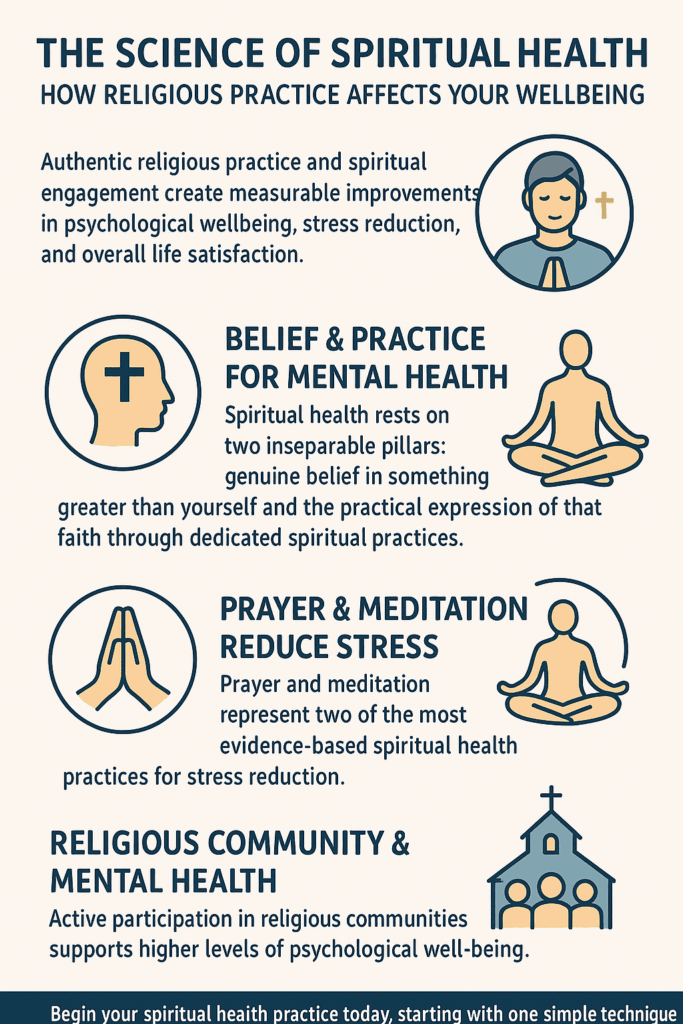
Spiritual health rests upon two inseparable pillars that work synergistically to support your mental wellness: genuine belief in something greater than yourself and the practical expression of that faith through dedicated spiritual practices. When you acknowledge transcendent forces that influence human experience, you create a psychological framework that provides meaning, purpose, and direction; the three essential components for mental health.
However, belief alone remains incomplete without corresponding practice. True spiritual health transforms belief into action through meditation, prayer, worship, ethical behavior, and spiritual disciplines that demonstrate commitment to your values. This practical dimension distinguishes active spiritual engagement from passive theology, creating a living practice that influences daily decisions and long-term psychological resilience.
Research published in the Journal of Religion and Health demonstrates that individuals maintaining both strong spiritual beliefs and consistent practices report significantly higher life satisfaction and psychological resilience. Studies further show that people who combine faith with regular spiritual practices experience 23% lower rates of anxiety and depression compared to those who view spirituality as purely cultural or institutional. This synergy between conviction and practice forms the foundation for authentic spiritual health that produces real wellness results.
How Spiritual Health Reduces Stress Through Prayer and Meditation
Prayer and meditation represent two of the most evidence-based spiritual health practices for stress reduction. When you engage in regular prayer, your body activates the relaxation response—a physiological state that counters stress hormones and promotes emotional regulation. Prayer activates brain regions associated with social bonding, emotional healing, and transcendent experience, creating measurable benefits for your mental and physical health.
As our article on transformative power of meditation highlights, spiritual health practices like meditation and contemplative prayer reduce cortisol levels, lower blood pressure, and enhance emotional stability. Individuals maintaining active prayer lives show dramatically improved stress management, increased sense of purpose, and greater resilience during life’s most challenging moments. The perceived ability to communicate with transcendent powers provides profound comfort during suffering and motivation for personal growth.
For practical stress reduction through spiritual health, consider these approaches: establish a daily prayer or meditation routine (even 10-15 minutes), participate in community worship that connects you with others, practice mindfulness during spiritual reading, engage in gratitude practices, and create sacred space in your home for reflection and spiritual practice.
Religious Community and Mental Health: The Healing Power of Connection
One of spiritual health’s most transformative benefits emerges through active participation in religious communities. Sociological research demonstrates that individuals who engage actively in faith communities show substantially higher levels of social capital, civic engagement, and psychological wellbeing. Religious communities provide essential context for personal spiritual development while creating networks of mutual support, accountability, and shared responsibility.
The presence of strong religious communities directly correlates with reduced social problems including depression, anxiety, substance abuse, and family breakdown. Regular participation in community worship and activities supports mental health outcomes comparable to professional counseling for many individuals. When you participate in spiritual health-focused communities, you receive encouragement, wisdom-sharing, and practical support during difficult seasons.
Effective religious communities balance individual spiritual needs with collective worship and service, creating environments where personal faith flourishes through community support. Learn more about building supportive communities. Members share resources and encouragement while working together to serve broader social needs, preventing spiritual practice from becoming isolated or disconnected from compassionate action.
5 Faith-Based Stress Reduction Techniques for Spiritual Health
Transform your spiritual health practice with these science-backed techniques:
1. Contemplative Prayer Practice: Dedicate 15-20 minutes daily to quiet prayer focused on gratitude, surrender, and connection with the divine. This practice reduces anxiety and increases emotional resilience.
2. Spiritual Meditation: Practice mindful meditation centered on sacred texts, mantras, or spiritual concepts. Research shows meditation reduces stress hormones while enhancing emotional regulation and mental clarity.
3. Community Worship Participation: Engage regularly in group worship experiences that combine music, shared belief, and collective spiritual energy—powerful for psychological wellbeing and social connection.
4. Sacred Reading and Reflection: Set aside time for contemplative reading of spiritual texts followed by journaling. This spiritual health practice enhances self-awareness and emotional processing. Discover journaling benefits for wellness.
5. Service and Spiritual Action: Engage in compassionate service aligned with your spiritual values. Research demonstrates that faith-based service produces greater mental health benefits than secular volunteering alone.
Spiritual Health and Physical Wellness: The Longevity Connection
The benefits of spiritual health extend far beyond mental wellness into measurable physical health outcomes. Emerging research reveals that individuals with strong spiritual practices and community engagement experience greater longevity, stronger immune function, and lower rates of chronic disease. Regular spiritual practice supports cardiovascular health, reduces inflammation, and enhances overall immune system function.
People who maintain active spiritual health practices show decreased blood pressure, improved sleep quality, and reduced chronic pain compared to those without spiritual engagement. The stress-reducing effects of prayer and meditation create physiological cascades that support healing and wellness at every level. Explore holistic approaches to physical wellness.
Conclusion: Building Your Spiritual Health Foundation
Spiritual health represents one of humanity’s most powerful yet underutilized resources for building resilience, reducing stress, and creating meaning in modern life. By integrating authentic spiritual belief with consistent practice and community connection, you access wellbeing benefits supported by decades of scientific research. Whether through prayer, meditation, community participation, or faith-based service, your spiritual health journey offers concrete pathways to enhanced mental wellness, emotional resilience, and life satisfaction.
Begin your spiritual health practice today, starting with one simple technique. Consistency matters more than complexity—even brief daily spiritual engagement produces measurable mental health benefits. For comprehensive research on spiritual health and psychological wellbeing, review this peer-reviewed study on religion, spirituality, and mental health outcomes.
Important Disclaimer
This article discusses religion and spirituality from a health and wellness perspective, respectfully honoring all faith traditions and spiritual practices. The research presented reflects scientific findings about religious and spiritual engagement without promoting any particular belief system. Spiritual health practices complement—but do not replace—professional mental health treatment or medical care. Consult qualified healthcare providers for mental health concerns or medical conditions.