How Your Diet Influences Disease: A Complete Guide to Risks, History, and Protective Strategies
Understanding the connection between food and disease is crucial for maintaining long-term health. Every meal presents a choice that can either build a foundation of wellness or gradually undermine it. Choosing meals wisely can serve as a cornerstone for wellness, and adopting healthy eating to prevent disease alongside employing evidence-based nutritional strategies for wellness can significantly reduce your risk of chronic illness.
This comprehensive guide cuts through the noise to provide a clear, evidence-based examination of how your dietary choices directly influence your risk of illness. We will move beyond simplistic views to explore the nuanced risks present in all food groups, empowering you with the knowledge to prevent food associated disease through informed eating habits.
How Animal Products Influence Disease Risk
The scientific literature contains extensive documentation on the link between animal products and disease. While they are excellent sources of complete protein and essential nutrients, you must understand and manage their specific risks.
The Risk of Overconsumption
Excessive intake of animal protein can lead to a dangerous overload of nitrogenous waste. This overload forces your liver and kidneys to work overtime to process and eliminate these byproducts. Consequently, this strain can cause an accumulation of substances like uric acid, significantly increasing the risk of painful conditions like gout and kidney stones. Moderating consumption of animal products is an essential part of healthy eating to prevent disease, and managing protein intake strategically can reduce these risks.
The Danger of Contamination
A more direct pathway for food and disease is pathogenic contamination. Humans can contract serious illnesses—including anthrax, tuberculosis, or rabies—from consuming meat of infected animals.
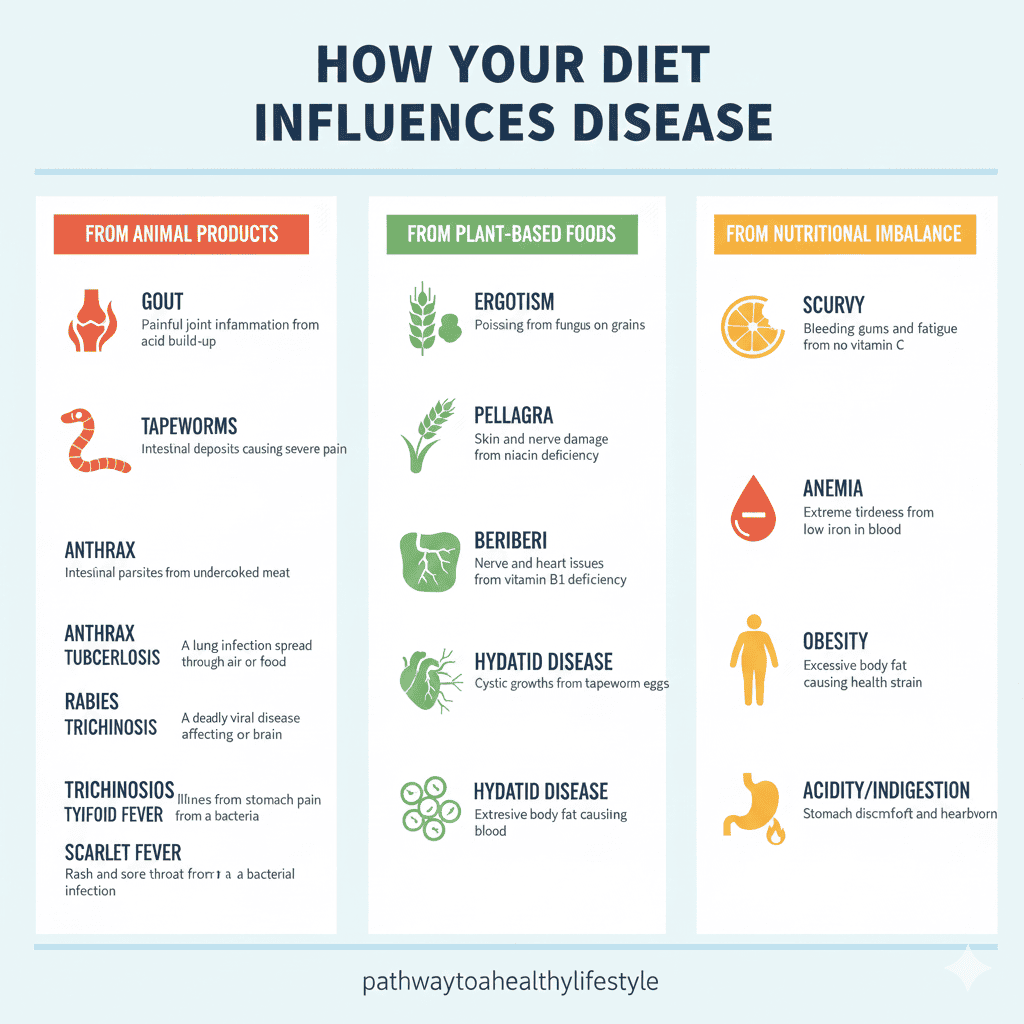
Furthermore, parasitic infections from tapeworms or Trichina spiralis commonly result from eating undercooked or raw meat.
These risks extend beyond meat; raw shellfish can transmit typhoid fever, and unpasteurized milk is a known carrier of scarlet fever and tuberculosis.
Understanding Plant-Based Diet Dangers
Many people operate under the dangerous misconception that a plant-based diet eliminates the risk of food and disease. However, plants carry their own unique set of risks, primarily from contamination and natural toxins.
Contamination on Raw Vegetables
Raw salad greens like lettuce and celery are frequent vectors for illness. Farmers often irrigate these crops with water that sewage contaminates. Simple rinsing does not always remove stubborn pathogens like typhoid bacteria. Additionally, parasites like the tapeworm eggs that cause severe hydatid disease can live on raw vegetables, leading to serious health complications. Even with plant-based diets, adopting nutritional strategies for wellness is vital to avoid deficiencies and minimize risks from contaminated produce.
Fungal and Nutritional Risks
History provides stark lessons on plant-based food and disease. Ergotism, or “St. Anthony’s Fire,” resulted from a fungus that infected rye, causing convulsions and gangrene. Nutritionally, over-reliance on a single plant food causes deficiency diseases; dependence on maize led to pellagra, and a diet centered on polished rice caused beri-beri. Including nutrient-rich legumes and diverse plant sources helps prevent these nutritional deficiencies. Even overconsumption of healthy sugars and starches can lead to obesity, liver congestion, and digestive issues like acidity and indigestion.
Historical Lessons on Nutrition and Illness
History demonstrates that understanding food and disease is essential to preventing widespread nutritional deficiencies. History offers powerful, actionable insights into preventing food and disease through dietary balance. The near-eradication of scurvy across Europe stands as a prime example. Medical professionals defeated this devastating illness not by removing a harmful element but by adding fresh fruits and vegetables rich in Vitamin C.
This pivotal event highlights a crucial truth: disease can stem just as easily from the absence of essential nutrients as from the presence of toxins. Through evidence-based nutritional strategies for wellness, we can avoid repeat mistakes of past populations. Learning to prevent anemia and incorporating blood-building foods into your diet are modern applications of these historical lessons.
Modern Nutritional Strategies for Lifelong Wellness
Bridging historical wisdom with contemporary science, modern research emphasizes sophisticated approaches to healthy eating to prevent disease that go far beyond simple food avoidance. According to a comprehensive review published in the MDPI Nutrients Journal, effective nutritional strategies for wellness in the 21st century must account for complexity and individuality.
Dietary Patterns Over Single Foods
Contemporary research has shifted focus from isolated nutrients to comprehensive dietary patterns. Evidence strongly supports approaches like the Mediterranean diet, DASH (Dietary Approaches to Stop Hypertension) diet, and traditional plant-based eating patterns. These patterns work synergistically—combining healthy fats, whole grains, lean proteins, and abundant vegetables—to reduce chronic disease risk far more effectively than focusing on single “superfoods.”
Individual Factors Matter
Modern nutritional strategies for wellness recognize that one size doesn’t fit all. Your optimal diet depends on:
- Metabolic factors: Individual variations in how you process carbohydrates, fats, and proteins
- Cultural context: Traditional foods that align with your heritage and preferences
- Access and economics: Realistic availability of healthy foods in your community
- Life stage: Nutritional needs change dramatically from childhood through older age
Lifelong Nutrition Framework
Research shows that healthy eating to prevent disease must be a lifelong commitment, adapted to each life stage. Childhood nutrition establishes metabolic programming, adult dietary patterns determine chronic disease risk, and senior nutrition focuses on maintaining function and preventing frailty. Strategies like fasting for health benefits can be incorporated at appropriate life stages, while understanding cooked vs raw food impacts helps optimize nutrient availability.
Dietary Patterns and Chronic Disease
Research shows certain dietary patterns significantly influence food and disease outcomes. Adopting nutritional strategies for wellness, such as the DASH diet or traditional Mediterranean eating patterns, can substantially reduce chronic disease risk through multiple mechanisms:
- Cardiovascular protection: Reducing saturated fat, increasing omega-3 fatty acids, and emphasizing whole plant foods
- Diabetes prevention: Managing glycemic load through whole grains, fiber, and balanced macronutrients
- Cancer risk reduction: Consuming protective phytochemicals, antioxidants, and anti-inflammatory compounds
- Cognitive health: Supporting brain function with healthy fats, B vitamins, and anti-inflammatory foods
Practical Prevention Strategies for Foodborne Illness
You can effectively mitigate your risk of food and disease by implementing several practical, mindful strategies. By implementing healthy eating to prevent disease practices and proper food handling, you can safeguard your health.
Essential Food Safety Practices
- Prioritize Thorough Cooking: Applying sufficient heat remains the single most effective step for destroying harmful bacteria, viruses, and parasites present in both animal and plant products. Learn how to cook food thoroughly for maximum safety.
- Embrace a Varied Diet: Consuming a wide range of foods ensures you receive a complete spectrum of nutrients. This practice protects you from deficiencies while avoiding the toxins associated with overconsumption of any single food type. Understanding proper food combining can enhance digestive efficiency.
- Practice Moderation: Portion control is essential. Avoid heavy meals, especially when tired, to reduce the burden on your digestive system. Safety lies in consuming moderate amounts of well-cooked, easily digested foods from diverse sources.
- Wash Produce Thoroughly: Rinse all fruits and vegetables under running water, using a brush for firm produce to remove surface contaminants.
- Maintain Proper Food Storage: Refrigerate perishables promptly and store raw and cooked foods separately to prevent cross-contamination.
Frequently Asked Questions (FAQ)
Q1: What is the most common connection between food and disease?
A: The most frequent connection is foodborne illness from pathogens like Salmonella or E. coli. People typically contract these illnesses by consuming undercooked meat, raw eggs, unpasteurized dairy, or unwashed contaminated produce. Cooking is a critical step in preventing food and disease, supporting healthy eating to prevent disease practices at home.
Q2: Does a plant-based diet eliminate the risk of food and disease?
A: No, switching to a plant-based diet does not eliminate risk; it changes it. This diet removes specific dangers from animal products but introduces others, primarily from bacterial contamination on produce, exposure to natural fungal toxins on grains, and potential nutritional deficiencies. Implementing comprehensive nutritional strategies for wellness is essential regardless of dietary pattern.
Q3: How does cooking prevent the transmission of food and disease?
A: Cooking prevents food and disease transmission by using heat to destroy harmful microorganisms. Achieving proper cooking temperatures reliably kills bacteria, viruses, and parasites, effectively breaking the chain of infection and making your food safe to consume.
Q4: Can you provide a historical example of food and disease?
A: A definitive historical example of food and disease is ergotism. This widespread poisoning occurred in the Middle Ages when populations consumed rye bread contaminated with a fungus, leading to horrifying symptoms known as “St. Anthony’s Fire,” including hallucinations, convulsions, and gangrene.
Q5: Why is dietary variety important for preventing food and disease?
A: A varied diet is your strongest defense because it protects against both nutritional deficiencies and overconsumption toxins. It ensures you get a wide array of essential nutrients to avoid deficiency diseases like scurvy while preventing the metabolic problems that arise from eating too much of any one food.
Q6: What are the most effective nutritional strategies for wellness in modern life?
A: The most effective modern strategies include adopting evidence-based dietary patterns (Mediterranean, DASH), personalizing nutrition based on individual metabolic needs, maintaining lifelong dietary awareness adapted to each life stage, prioritizing whole foods over processed options, and balancing macronutrients appropriately for your activity level and health goals.
Conclusion: Taking Control of Your Health Through Informed Choices
The relationship between food and disease is complex but manageable with knowledge and intention. By understanding the risks present in all food groups—from animal products to plant-based options—and implementing evidence-based nutritional strategies for wellness, you can dramatically reduce your disease risk.
The key principles are timeless: cook thoroughly, eat varied foods, practice moderation, and adapt your diet to your individual needs and life stage. Healthy eating to prevent disease isn’t about perfection or rigid rules—it’s about making informed, balanced choices consistently over time.
Your health is built one meal at a time. Choose wisely, eat mindfully, and let food be your foundation for lifelong wellness.