The Complete Guide to Garlic’s Health Benefits: Science, Traditional Uses, Safe Preparation & Real Risks (2025)
The Complete Guide to Garlic Health Benefits reveals why this simple kitchen herb remains one of the most powerful natural healing tools available today. For centuries, garlic has been used to strengthen the body, protect against illness, and restore balance—and modern research now explains exactly how its unique compounds support whole-body wellness. Whether you’re looking to boost immunity, improve circulation, calm inflammation, or simply make smarter natural-health choices, this guide shows you how to use garlic safely, effectively, and with intention.
But here’s the hook: most people never receive the full therapeutic power of garlic because they prepare it incorrectly. The way you crush it, cook it, or supplement with it can dramatically change its health impact—sometimes increasing benefits, sometimes destroying them entirely. Once you understand these nuances, garlic becomes a reliable ally for vitality, resilience, and long-term health.
In this complete guide, you’ll learn the science behind garlic’s most important healing compounds, how traditional cultures used garlic as medicine, the best methods for preparing it for maximum strength, and the real risks you must understand before using it therapeutically. By the end, you’ll know exactly how to integrate garlic into your daily routine—confidently and safely—to support natural healing from the inside out.
What Is Garlic? Botanical Background & Traditional Uses
The Plant Behind the Medicine
Garlic belongs to the Allium genus within the Amaryllidaceae family, sharing close botanical kinship with onions, leeks, chives, and shallots. This perennial bulbous plant grows from a single clove planted in the ground, eventually forming a multi-cloved bulb encased in a papery sheath. Originating in Central Asia over 5,000 years ago, its cultivation and use spread along trade routes to ancient Mesopotamia, Egypt, and eventually throughout the entire ancient world. The very fact that garlic was independently valued across disparate cultures—from China to Rome—hints at the universality of its observed effects.
Historical Medicinal Use: A Cross-Cultural Pillar
Ancient civilizations intuitively harnessed garlic’s healing power, embedding it into their medical and cultural practices long before modern pharmacology existed.
- Ancient Egypt (c. 2600–2100 BCE): The Ebers Papyrus, one of the oldest medical texts, documents garlic’s use for treating heart disorders, tumors, and parasitic infections. More famously, Herodotus recorded that the pyramid builders were given garlic rations to maintain strength, stamina, and ward off epidemic disease—an early example of workplace wellness.
- Ancient Greece and Rome: Hippocrates, the “Father of Medicine,” prescribed garlic for infections, digestive ailments, and as a general tonic. Roman soldiers and athletes consumed it before battle or competition, believing it enhanced courage and performance. Dioscorides, a Greek physician in the Roman army, lauded its cleansing and diuretic properties in his seminal work, De Materia Medica.
- Traditional Chinese Medicine (TCM): For millennia, garlic (dasuan) has been used to warm the middle Jiao (digestive system), expel cold, resolve toxicity, and combat parasitic infections. It features in formulas for diarrhea, dysentery, and respiratory conditions like cough and tuberculosis.
- Medieval Europe: During the plague outbreaks, garlic was a frontline defense. Four thieves during the 1721 plague in Marseille were said to have used a vinegar-soaked garlic preparation to rob victims without falling ill themselves, leading to the famous “Four Thieves Vinegar.”
- 17th Century Scientific Documentation: The English physician Dr. Thomas Sydenham provided one of the earliest Western clinical reports, documenting garlic’s remarkable effectiveness in treating dropsy (edema related to heart failure). He noted complete resolution of swelling in some patients using garlic as the primary intervention, a significant observation that hinted at its cardiovascular and diuretic actions.
This rich, cross-cultural tapestry of use forms a compelling empirical foundation. It suggests that the garlic health benefits we study today are not new discoveries but ancient observations awaiting biochemical explanation.
Key Bioactive Compounds: The Biochemical Basis of Garlic’s Power
The pungent smell that follows crushing a garlic clove is the scent of its chemistry springing to life. Understanding this process is key to unlocking its medicinal potential.
The Allicin Cascade: From Stable Precursor to Potent Medicine
In intact garlic, the amino acid alliin and the enzyme alliinase are stored in separate cellular compartments. Mechanical disruption—crushing, chopping, or chewing—brings them together. Alliinase rapidly converts alliin into allicin, the volatile, sulfur-rich compound responsible for garlic’s signature aroma and many of its acute pharmacological effects.
Critical Insights on Allicin:
- Formation is Time-Sensitive: Allicin synthesis peaks within seconds to minutes of crushing but begins to degrade quickly thereafter. Its instability is why preparation timing is non-negotiable for therapeutic use.
- Broad-Spectrum Activity: Allicin is a potent, non-specific antimicrobial. It reacts with thiol groups in enzymes, disrupting the metabolism of bacteria, viruses, and fungi. This explains its historical use for infections.
- A Gateway Molecule: While allicin itself is transient, it breaks down into other bioactive, more stable sulfur compounds that circulate systemically, contributing to long-term benefits like cardiovascular protection.
Beyond Allicin: A Symphony of Sulfur Compounds
The medicinal uses of garlic extend far beyond allicin, and it’s derived compounds include:
- Diallyl Disulfide (DADS) & Diallyl Trisulfide (DATS): According to the research on diallyl disulfide, these oil-soluble compounds, formed as allicin breaks down, contribute to cardiovascular benefits, cancer chemoprevention studies, and detoxification enzyme induction.
- S-allyl Cysteine (SAC): A stable, water-soluble compound with high bioavailability. SAC is a major component of aged garlic extract (AGE) and is prized for its potent antioxidant and neuroprotective effects without the pungent odor.
- Ajoene: Formed when allicin decomposes in oil, ajoene has demonstrated significant antiplatelet (blood-thinning) and antifungal properties.
Supporting Cast: Antioxidants and Nutrients
Garlic also contains appreciable levels of flavonoids, selenium (especially when grown in selenium-rich soil), vitamin B6, vitamin C, and manganese. These contribute to its overall antioxidant capacity, helping to mitigate oxidative stress—a common pathway in aging and chronic disease. This nutritional profile complements the targeted actions of its sulfur compounds, making whole garlic a complex, synergistic medicine.
Proven and Potential Health Benefits of Garlic
The extensive garlic health benefits can be organized by bodily systems. Here, we expand on the mechanisms and evidence for each.
1. Cardiovascular and Circulation Support: A Cornerstone Benefit
Cardiovascular protection is arguably the most robustly researched area among garlic health benefits. Meta-analyses of clinical trials consistently show modest but significant effects, positioning garlic as a valuable dietary adjunct for heart health.
Multifaceted Mechanisms of Action:
- Vasodilation & Blood Pressure: Garlic compounds, particularly its polysulfides, stimulate the production of hydrogen sulfide (H₂S) and nitric oxide (NO) within blood vessels. These are potent gaseous signaling molecules that relax vascular smooth muscle, leading to vasodilation and reduced peripheral resistance.
- Cholesterol & Lipid Metabolism: Garlic appears to modestly inhibit key enzymes in the liver involved in cholesterol synthesis (like HMG-CoA reductase, the target of statins). More importantly, it may reduce the oxidation of low-density lipoprotein (LDL) cholesterol. Oxidized LDL is a primary driver of atherosclerotic plaque formation; preventing this oxidation is a crucial anti-atherogenic effect.
- Anti-Platelet Activity: Compounds like ajoene inhibit platelet aggregation, reducing the risk of inappropriate clot formation. This “blood-thinning” effect is beneficial for circulation but requires caution with anticoagulant medications.
- Antioxidant Protection: By scavenging free radicals in the bloodstream and vascular walls, garlic’s antioxidants help protect endothelial function, the critical inner lining of blood vessels.
Practical Application & Nuance:
For cardiovascular support, consistency is key. Consuming 1-2 cloves of raw garlic daily (properly prepared) or 600-1,200 mg of standardized aged garlic extract shows the best evidence. It's crucial to understand that these garlic health benefits are preventive and supportive. Garlic is not a substitute for prescribed cardiovascular medication but can be a powerful complementary strategy under a doctor's supervision.
2. Immune Support and Antimicrobial Properties: Nature’s Broad-Spectrum Agent
The medicinal uses of garlic for infection are legendary and well-substantiated by science. Its antimicrobial action is broad, non-specific, and multi-targeted.
Expanded Antimicrobial Mechanisms:
Allicin’s reactivity is its strength. It readily penetrates bacterial membranes and inactivates essential thiol-containing enzymes, such as thioredoxin reductase and RNA polymerase, effectively halting microbial metabolism.
- Against Bacteria: Effective against both Gram-positive (e.g., Staphylococcus aureus, Bacillus anthracis) and Gram-negative (e.g., E. coli, Salmonella) species, including some antibiotic-resistant strains like MRSA in lab studies.
- Against Viruses: While not a cure, allicin and other compounds may interfere with viral attachment and replication. Observational and small-scale studies suggest regular consumers have fewer and less severe colds.
- Against Fungi: Shows activity against Candida albicans and dermatophytes, supporting its traditional use for yeast infections and ringworm.
- Against Parasites: Historical use for intestinal worms like pinworms and roundworms is plausible given allicin’s toxicity to single-celled parasites like Entamoeba histolytica.
Real-World Immune Application:
During cold season, a proactive approach is beneficial. A regimen of 1-2 raw cloves daily may bolster innate immunity. For an acute sore throat, the classic garlic-honey syrup (crushed garlic left for 10 minutes then mixed with raw honey) leverages both the antimicrobial power of allicin and the soothing, enzymatic properties of honey.
Critical Perspective:
While powerful, garlic is not a substitute for modern medicine in serious infections. A systemic bacterial infection like pneumonia requires antibiotics. Garlic’s role here is potentially adjunctive (supporting the immune response) and certainly preventive. This distinction is vital for safe practice.
3. Anti-inflammatory and Antioxidant Effects: Taming the Fires Within
Chronic, low-grade inflammation is the silent underpinning of most modern chronic diseases, from arthritis to heart disease to cognitive decline. Garlic’s sulfur compounds intervene at multiple points in the inflammatory cascade.
Deep Dive into Anti-inflammatory Actions:
- Enzyme Inhibition: Garlic extracts inhibit the activity of pro-inflammatory enzymes like cyclooxygenase (COX) and lipoxygenase (LOX), which produce signaling molecules (prostaglandins, leukotrienes) that promote pain, swelling, and fever.
- Cytokine Modulation: Studies show garlic can downregulate the production of key inflammatory cytokines like tumor necrosis factor-alpha (TNF-α) and interleukin-6 (IL-6).
- Nrf2 Pathway Activation: Garlic compounds activate the Nrf2 (Nuclear factor erythroid 2–related factor 2) pathway, the body’s master regulator of antioxidant and detoxification genes. This increases production of endogenous antioxidants like glutathione, providing a sustained, systemic defense against oxidative stress.
Implications for Health:
These mechanisms translate to potential benefits for:
- Joint Health: Mitigating inflammatory processes in conditions like osteoarthritis.
- Neuroprotection: Reducing neuroinflammation, a factor in Alzheimer’s and Parkinson’s diseases.
- General Resilience: Lowering systemic inflammatory burden, which is linked to faster biological aging.
This systemic anti-inflammatory effect is a cornerstone of the long-term garlic health benefits that contribute to overall vitality and disease resistance.
4. Digestive Health and Gut Microbiome Support
Garlic acts as a potent digestive stimulant and a nuanced modulator of the gut ecosystem, illustrating another facet of the medicinal uses of garlic.
Digestive Stimulation: The pungency of garlic triggers reflex salivation and stimulates gastric juice secretion, enhancing the cephalic and gastric phases of digestion. This makes it an excellent aperitif. Learn more from our article on how to improve your digestion naturally for a holistic guide.
Complex Relationship with the Gut Microbiome:
This is a prime example of garlic’s intelligent, selective action. While it can be antibiotic, it doesn’t indiscriminately wipe out gut flora.
- Prebiotic Effect: Garlic is rich in fructooligosaccharides (FOS), a type of soluble fiber that serves as fuel for beneficial Bifidobacteria in the colon, promoting their growth.
- Selective Antimicrobial Action: While harmful, pathogenic bacteria are often susceptible to allicin, many beneficial commensal species are more resistant, possibly due to protective mechanisms or location in the gut. This allows garlic to potentially reduce pathogens while sparing or even feeding probiotics.
- Parasitic Clearance: Its historical use for intestinal worms aligns with allicin’s antiparasitic properties.
Cautions for Sensitive Individuals:
The same compounds that stimulate digestion (allicin, diallyl sulfides) can irritate the mucosal lining in those with pre-existing conditions like gastritis, GERD, or IBS. For these individuals, cooked garlic or aged garlic extract, which are far gentler, are the preferred forms to gain other garlic health benefits without digestive distress.
5. Respiratory Health: From Breath to Bloodstream
One of the most fascinating aspects of garlic’s pharmacology is its pulmonary excretion. When consumed, volatile sulfur compounds enter the bloodstream, travel to the lungs, and are exhaled. Learn more from our article on how you can improve your respirotary health using natural methods like breathing.
Therapeutic Implications of Pulmonary Excretion:
This creates a direct, localized delivery system to the respiratory tract.
- Expectorant & Decongestant: The excreted compounds can help loosen thick mucus (phlegm) and stimulate the cilia lining the airways, promoting clearance.
- Local Antimicrobial Action: As these compounds pass through the bronchial tubes and are exhaled, they create a microenvironment less hospitable to respiratory pathogens.
- Anti-inflammatory Effect: They may help calm bronchial inflammation, which is beneficial in conditions like asthma and bronchitis.
Historical and Modern Synergy:
Traditional preparations like garlic syrups or garlic-infused milk for coughs now have a plausible mechanism. Modern herbalists often recommend raw garlic at the onset of a respiratory infection to leverage this direct action. For chronic lung conditions, the long-term systemic anti-inflammatory garlic health benefits may also provide supportive value.
6. Detoxification Support and Heavy Metal Chelation
Garlic’s sulfur compounds play a crucial role in the body’s Phase II detoxification pathways, particularly sulfation and glutathione conjugation. These processes help transform toxins and metabolic waste into water-soluble forms for excretion.
7. Topical Uses and the Critical Safety Warnings Revisited
While the internal garlic health benefits are substantial, external use demands extreme caution. Historical texts describe poultices for infected wounds or placing garlic-soaked cloth in the ear for infection. Modern dermatology warns against this strenuously.
The Science Behind the Burn:
Allicin and other thiosulfinates are potent irritants. On skin, they can cause:
- Allergic Contact Dermatitis: A type IV hypersensitivity reaction.
- Chemical Burns: Direct cytotoxicity to skin cells, leading to erythema, blistering, and even full-thickness burns, a condition sometimes called “garlic burn.” The risk is exceptionally high with prolonged application or on sensitive skin (e.g., children, facial skin).
Absolute Contraindications for Topical Use:
- Never in the Ear Canal: Can cause severe chemical burns to the delicate tympanic membrane and skin, leading to permanent damage.
- Never on Open Wounds or Mucous Membranes.
- Never Under Occlusive Dressings (like bandages), which increase absorption and irritation.
Safer Topical Alternatives: If used externally, only heavily diluted garlic-infused oil (1 clove in 1/4 cup carrier oil) should be considered, and only for minor fungal skin issues like athlete’s foot, with a patch test first. For any significant skin or ear condition, professional medical advice is non-negotiable. This stark warning tempers the otherwise broad garlic health benefits, emphasizing that its power must be respected and channeled correctly.
How to Use Garlic Safely and Effectively: A Masterclass in Preparation
Maximizing the garlic health benefits is an art and science centered on the liberation and preservation of allicin and its derivative compounds.
Refined Preparation Methods:
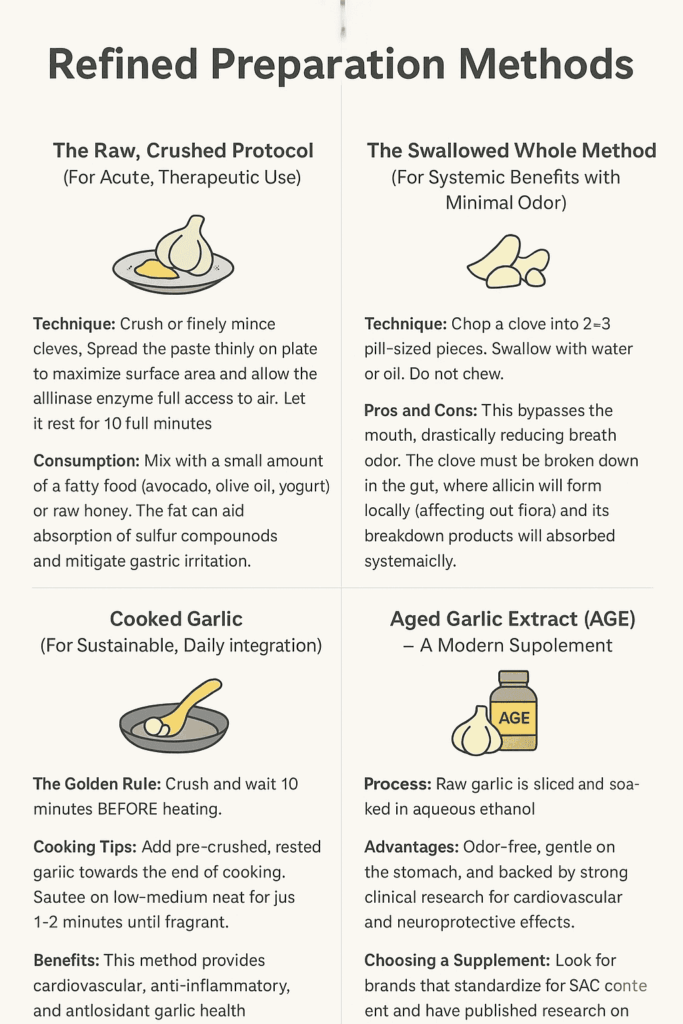
1. The Raw, Crushed Protocol (For Acute, Therapeutic Use):
- Technique: Crush or finely mince cloves. Spread the paste thinly on a plate to maximize surface area and allow the alliinase enzyme full access to air. Let it rest for 10 full minutes. This wait is the single most important step for generating maximum allicin.
- Consumption: Mix with a small amount of a fatty food (avocado, olive oil, yogurt) or raw honey. The fat can aid absorption of sulfur compounds and mitigate gastric irritation.
- Why it Works: This method yields the highest possible allicin concentration, making it ideal for acute immune challenges or when seeking potent antimicrobial effects.
2. The Swallowed Whole Method (For Systemic Benefits with Minimal Odor):
- Technique: Chop a clove into 2-3 pill-sized pieces. Swallow with water or oil. Do not chew.
- Pros and Cons: This bypasses the mouth, drastically reducing breath odor. The clove must be broken down in the gut, where allicin will form locally (affecting gut flora) and its breakdown products will be absorbed systemically. However, allicin yield is lower than with pre-crushing, as the enzymatic reaction happens in the less ideal environment of the stomach.
3. Cooked Garlic (For Sustainable, Daily Integration):
- The Golden Rule: Crush and wait 10 minutes BEFORE heating. If you want cooked garlic to retain some of the benefits of raw, you must allow the allicin to form first. Allicin is heat-sensitive, but the stable sulfur compounds it decomposes into (DADS, DATS) are more heat-resistant and still highly bioactive.
- Cooking Tips: Add the pre-crushed, rested garlic towards the end of cooking. Sauté on low-medium heat for just 1-2 minutes until fragrant. Long, high-heat roasting or boiling destroys most of the volatile compounds.
- Benefits: This method provides the cardiovascular, anti-inflammatory, and antioxidant garlic health benefits in a gentle, palatable, and sustainable form suitable for daily use.
4. Aged Garlic Extract (AGE) – A Modern Supplement:
- Process: Raw garlic is sliced and soaked in aqueous ethanol for up to 20 months. This lengthy aging process converts the pungent, irritating compounds (like allicin) into stable, non-pungent, and highly bioavailable ones like S-allyl cysteine (SAC).
- Advantages: Odor-free, gentle on the stomach, and backed by strong clinical research for cardiovascular and neuroprotective effects. It represents a refined, specific approach to harnessing garlic health benefits.
- Choosing a Supplement: Look for brands that standardize for SAC content and have published research on their specific product (e.g., Kyolic).
Dosage, Timing, and Synergy: Personalizing Your Protocol
General Dosage Guidelines:
- Preventive Maintenance: 1-2 cloves of cooked garlic daily in food, or 1 clove of raw (properly prepared) several times per week.
- Cardiovascular Focus: 600-1,200 mg of aged garlic extract daily, or the equivalent of 2-4 raw cloves.
- Acute Immune Support: Up to 3-4 raw cloves (crushed and rested) in divided doses throughout the day for a period of 5-7 days.
Timing for Optimal Effects:
- With Meals: Always recommended to buffer potential gastric irritation. You can learn more from our guide on peptic ulcer foods and what to avoid.
- Divided Doses: For therapeutic raw garlic intake, splitting the dose (e.g., morning and evening) maintains more consistent blood levels of active compounds.
- Avoid at Bedtime: The stimulating effect on digestion and potential for reflux makes it unsuitable right before lying down.
Synergistic Combinations:
- With Vitamin C: The vitamin C in parsley or citrus can help neutralize some breath compounds and provides complementary antioxidant support.
- With Probiotics: Taking garlic alongside probiotic foods (like yogurt) or supplements can support the “weed and feed” concept for the gut—potentially reducing pathogens while nourishing beneficial bacteria.
- In the Mediterranean Diet: Garlic’s effects are amplified in the context of a diet rich in olive oil, vegetables, and fish—a synergy that likely explains part of the diet’s profound health benefits.
FAQs: Addressing Common Concerns
Q: Does cooking garlic destroy all its benefits?
A: This is a common misconception. While cooking destroys allicin, it transforms it into other beneficial compounds. The garlic health benefits for chronic disease prevention (heart disease, cancer) seen in population studies are largely based on cooked garlic consumption. The key is to use the “crush and wait” method before cooking to initiate the beneficial biochemical cascade.
Q: I take blood thinners (warfarin/aspirin). Can I eat garlic?
A: This requires careful management and must be discussed with your doctor. Garlic, especially in raw therapeutic doses, has antiplatelet effects. Combined with pharmaceutical anticoagulants, it could increase the risk of bleeding or bruising. Culinary amounts used consistently in food are generally considered safe for many, but any change in intake should be communicated to your healthcare provider. They may need to monitor your INR (a clotting test) more closely. This is a critical example of why understanding the potency behind the medicinal uses of garlic is essential for safety.
Q: Is there a difference between white, purple, and black garlic?
A: Yes.
White Garlic Common fresh garlic. Highest allicin potential when raw.
Purple/Red Garlic: Often has a slightly hotter, more complex flavor but similar phytochemistry.
Black Garlic: This is not a variety, but a product. Fresh garlic is fermented under controlled heat and humidity for weeks. The Maillard reaction turns cloves black, sweet, and sticky, with a flavor reminiscent of balsamic or tamarind. The allicin is completely converted, but it becomes exceptionally high in antioxidants (S-allyl cysteine, alkaloids) and is very gentle on the stomach. It offers unique garlic health benefits focused on antioxidants and digestion.
Q: Can garlic help with skin conditions like acne or psoriasis when eaten?
A: Potentially, through secondary, systemic mechanisms. The anti-inflammatory and antimicrobial garlic health benefits, along with detoxification support, may help modulate systemic factors that contribute to inflammatory skin conditions. However, it is not a direct topical treatment for these conditions and should be considered a supportive dietary component, not a primary cure. Direct topical application for acne is strongly discouraged due to high risk of irritation and burns.
Conclusion: Integrating an Ancient Ally into Modern Wellness
Garlic is a strategic health tool with defined applications. Use raw, crushed garlic for its direct antimicrobial power during illness. Use cooked garlic consistently for long-term cardiovascular and anti-inflammatory garlic health benefits. Choose aged extracts for targeted, odor-free supplementation. Always respect its potency, particularly regarding drug interactions and topical hazards. By applying this evidence-based framework, you can effectively integrate one of nature’s most studied medicinal plants into a rational health strategy.
Good explanation
appreciate