
Practical Strategies for Better Milk Digestion: From Mindful Drinking to Food Pairings
You love milk but feel bloated, heavy, or uncomfortable afterward. You’re not alone. Many people assume they can’t handle dairy, but the problem isn’t always lactose intolerance—the secret lies in how to digest milk better.
Simple adjustments transform milk from a source of discomfort into a nourishing, easily digestible food. The way you consume milk matters as much as the milk itself. From the role of saliva in pre-digestion to the timing and food pairings you choose, strategic changes reduce bloating while preserving the benefits of this nutrient-rich beverage.
In this guide, you’ll discover:
- How saliva changes milk protein structure for easier digestion
- Why gulping milk triggers that heavy, weighted-down feeling
- Specific food pairings that support comfortable dairy consumption
- Whether fermented dairy offers a gentler alternative
These evidence-based strategies help you drink milk without discomfort—no dairy elimination required. While these tips benefit many people, they don’t replace medical diagnosis. If you suspect lactose intolerance or a milk allergy, consult a healthcare professional.
Key Takeaways
- Sip slowly to mix milk with saliva and begin pre-digestion
- Avoid pairing milk with heavy meats or dense proteins
- Try fermented dairy like yogurt or kefir for easier tolerance
- Experiment with portion size—some people digest larger servings better when consumed mindfully
How Milk Digestion Works: The Role of Saliva
Digestion starts in your mouth, not your stomach. Sip milk slowly, and saliva mixes with the liquid, beginning the breakdown process before proteins reach your stomach.
Saliva contains enzymes like amylase and protective proteins such as mucins. Research in digestive physiology published in the journal Foods reveals that these salivary components interact with dairy proteins in three critical ways:
1. Influence on Curd Structure Saliva modifies the rheological properties of gastric chyme, producing a looser, more fragmented curd. This softer texture breaks down more easily than the dense, rubbery clumps that form when you gulp milk quickly.
2. Astringency and Lubrication Salivary proteins interact with whey proteins at low pH, causing increased particle size and aggregation—perceived as astringency. Saliva also acts as a lubricant, and dairy proteins alter this property, influencing the initial structural breakdown of food.
3. Impact on Digestion Speed The interaction between saliva and dairy proteins influences the rate of enzymatic hydrolysis (proteolysis). Saliva’s interaction with milk proteins modulates the curd’s density, affecting how fast nutrients release and empty into the small intestine. This biological process of curd formation determines whether you feel light or weighed down.
Skip this salivary mixing by drinking too fast, and you leave proteins unprepared. Larger, denser clumps form in the stomach, increasing the likelihood of bloating and that post-dairy fog many people experience.
Why Gulping Milk Triggers Digestive Discomfort
Many people report heaviness or cramps after drinking milk. They assume lactose intolerance. While lactose sensitivity exists, rapid consumption mimics the same symptoms.
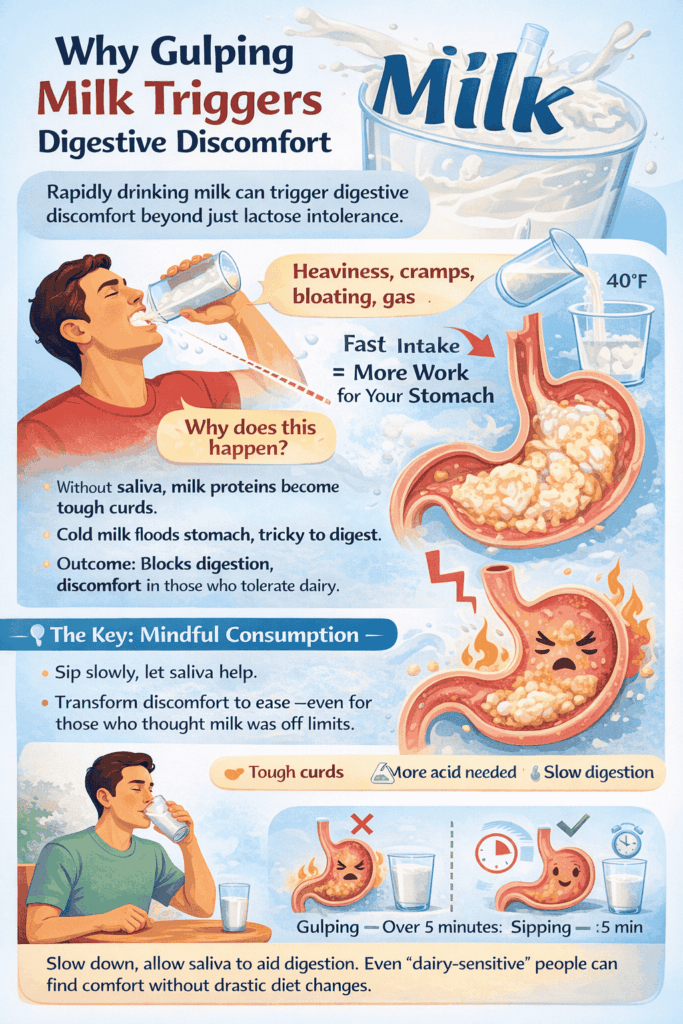
Without saliva’s protective role, milk proteins form tough curds in the stomach that digest slowly. A stomach suddenly filled with cold, unprocessed milk faces more work, triggering discomfort in people who otherwise tolerate dairy products well.
The data reveals a clear pattern: it’s not just what you drink but how you drink it. Slow down and practice mindfulness, and you transform the experience—even for those who thought milk was off limits.
Learn more about increasing your digestive power to support better nutrient absorption across all foods.
Practical Milk Digestion Tips for Daily Life
Make these adjustments to reduce discomfort and improve how your body processes dairy:
1. Sip Slowly and Deliberately Each mouthful should mix thoroughly with saliva before you swallow. This practice primes proteins for better digestion and prevents large curd formation.
Think of it as “chewing” your milk—an overlooked but powerful digestive tool.
2. Hold Milk Briefly in Your Mouth Even a few seconds allows salivary enzymes to start working, giving your stomach a smoother job later.
This simple pause initiates the pre-digestion process that makes the difference between comfort and discomfort.
3. Avoid Ice-Cold Milk Extremely cold milk shocks the stomach lining and encourages fast gulping. Let milk warm slightly to room temperature. This enhances flavor and naturally encourages slower consumption.
These milk digestion tips require no special equipment or drastic dietary changes. They simply work with your body’s natural digestive rhythm rather than against it.
Smart Portion Sizes and Food Pairings
Portion size plays a surprising role in dairy tolerance. Some people digest larger amounts better than smaller servings because a higher volume dilutes stomach acid, forming softer curds. This response varies among individuals, so experiment gradually.
Start with a smaller portion and increase only if it feels comfortable. Listen to your body’s signals—digestive tolerance remains highly individual.
Food Pairing Strategy
As our comprehensive guide to proper food combining explains, food pairing dramatically affects digestive comfort. Milk digests most effectively when consumed alone or with simple, plant-based foods.
Pair milk with:
- Fresh fruits (apples, bananas, berries)
- Whole grains (oats, rice)
- Vegetables (leafy greens, root vegetables)
Avoid pairing with:
- Heavy meats (beef, pork, lamb)
- Dense proteins (eggs consumed simultaneously)
- Complex, multi-course meals
Why does this matter? Combining milk with heavy proteins confuses the stomach. Each food type requires different levels of stomach acid and digestive timing. This mismatch slows digestion and creates that weighted-down feeling hours after eating.
Simplifying food pairings stands as one of the most effective strategies to drink milk without discomfort. Understanding the dangers of glucose and other dietary factors further supports optimal digestive function.
Fermented Dairy: A Gentler Alternative
If slow sipping doesn’t resolve your symptoms, add fermented dairy to your routine. Yogurt, kefir, and cultured buttermilk contain beneficial bacteria and pre-digested proteins that make them gentler on your digestive system.
Scientists discovered that fermentation breaks down lactose and modifies proteins before you consume them. This pre-digestion reduces the work your stomach must perform. Studies on fermented dairy show improved gut microbiome diversity and reduced digestive complaints compared to fresh milk.
While fermented dairy proves easier to tolerate for many people, individuals with dairy allergies or severe lactose intolerance should still proceed with caution. These products may help but likely won’t eliminate all symptoms entirely.
Switching some of your milk intake to fermented options provides the same calcium, protein, and vitamin benefits while supporting long-term gut health. For parents seeking alternatives, explore our guide on natural infant nutrition for age-appropriate dairy introduction strategies.
Nutrition Balance: More Than Just Dairy
Milk delivers excellent protein, calcium, and vitamins D and B12. Balance remains critical.
Relying too heavily on milk without complementing it with fruits and vegetables leads to mineral imbalances. Milk provides rich calcium but lower potassium, which fresh produce supplies abundantly. Milk contributes specific nutrients but should form part of a varied diet that includes fiber-rich plant foods to support digestion.
Fat Content Considerations:
- Whole milk provides satiety and fat-soluble vitamins but delivers higher calorie density
- Low-fat or skim options reduce calories while maintaining calcium and protein levels
Choose based on your health goals—whether you prioritize weight control or energy density. A healthy approach pairs milk with whole foods to ensure complete nutrition, treating milk as a valuable supplement rather than a dietary foundation.
Who This Guide Is For
This guide serves: People who experience mild digestive discomfort with milk and want practical, lifestyle-based strategies to improve tolerance without eliminating dairy.
Who should seek medical advice: Those with persistent symptoms, known lactose intolerance, milk allergies, or gastrointestinal conditions. Additionally, anyone concerned about milk and tuberculosis safety should consult their healthcare provider.
For individuals with diagnosed lactose intolerance, these practices help but likely won’t eliminate symptoms entirely. Lactose-free milk or enzyme supplements (lactase) may provide necessary solutions in such cases.
Take Control of Your Digestive Comfort
Digestive health isn’t just about what you eat—it’s about how you consume it.
Slow down. Use saliva to your advantage. Choose food pairings carefully. These adjustments transform how you experience milk. Rather than cutting dairy from your diet, apply these strategies first. You may discover that mindful habits make milk enjoyable again.
Learning how to digest milk better represents a practical, sustainable step toward better nutrition and greater digestive comfort. Apply these milk digestion tips consistently for several weeks. Notice the difference. Listen to your body’s response.
You don’t need to abandon the foods you love. You need to understand how to consume them intelligently. Master this approach, and you enjoy dairy with confidence—without that heavy, uncomfortable aftermath.
Frequently Asked Questions
Q: Why does drinking milk quickly cause digestive discomfort?
Rapid consumption prevents adequate mixing with saliva, which contains enzymes and compounds that begin the digestive process. Without this preparatory step, milk proteins form larger aggregates in the stomach that break down more slowly, leading to bloating, heaviness, and that weighted-down feeling many people experience after dairy consumption.
Q: Can I improve milk digestion without eliminating dairy from my diet?
Yes. Most people who experience milk-related discomfort improve their tolerance by consuming milk slowly, sipping rather than gulping, allowing it to mix with saliva, and avoiding combinations with heavy protein foods like meat. These milk digestion tips eliminate digestive issues for many people without requiring dairy elimination. Experiment with these strategies before abandoning dairy entirely.
Q: Is fermented dairy easier to digest than regular milk?
Generally yes. Fermented dairy products like yogurt, kefir, and cultured buttermilk contain beneficial bacteria that pre-digest lactose and proteins. The fermentation process breaks down components that challenge many digestive systems, making these products more tolerable while providing similar nutritional benefits plus probiotic advantages. This makes fermented options an excellent strategy to drink milk without discomfort.
Q: How long should I wait to see if these milk digestion tips work?
Apply these strategies consistently for 2-3 weeks before evaluating results. Your digestive system needs time to adapt to new consumption patterns. Track your comfort level after each dairy serving, noting which specific practices (slow sipping, food pairing adjustments, temperature changes) produce the most noticeable improvements. Digestive tolerance remains highly individual, so patience and observation yield the best outcomes.