
Strengthen the Heart Naturally: Evidence-Based Guide to Cardiovascular Health
Strengthening your heart naturally involves three key lifestyle pillars: targeted movement, stress management, and intentional nourishment. This guide provides actionable steps to help you support cardiovascular strength through safe exercises, dietary adjustments, and breathing techniques. You’ll discover:
- Specific, safe exercises appropriate for different fitness levels
- How to recognize early warning signs requiring medical evaluation
- The physiological connection between stress, digestion, and heart function
- Science-backed lifestyle strategies that complement medical care
These approaches work best when integrated with professional medical guidance, especially if you have existing cardiac conditions.
How Movement Helps Strengthen the Heart Naturally
Your heart muscle responds to physical activity similarly to your skeletal muscles—it adapts and grows stronger with appropriate challenge. Studies published in cardiovascular physiology journals suggest that regular moderate exercise improves cardiac efficiency and circulation. The key involves selecting movements that challenge your cardiovascular system without overwhelming it.
Clinical guidelines commonly emphasize moderate aerobic activity as foundational for cardiac health. Many people either avoid exercise entirely due to fear or push too hard with intense workouts that may cause harm rather than benefit.
Specific Exercises for Heart Health That Build Strength Safely
Start with gentle resistance movements that provide cardiovascular stimulation without excessive strain. Reclined arm raises with light weights (1-3 pounds) offer excellent benefits. Lie on your back, slowly raise both arms overhead while keeping elbows straight, then lower them in a controlled motion. This position allows your heart to pump blood efficiently while strengthening chest and shoulder muscles.
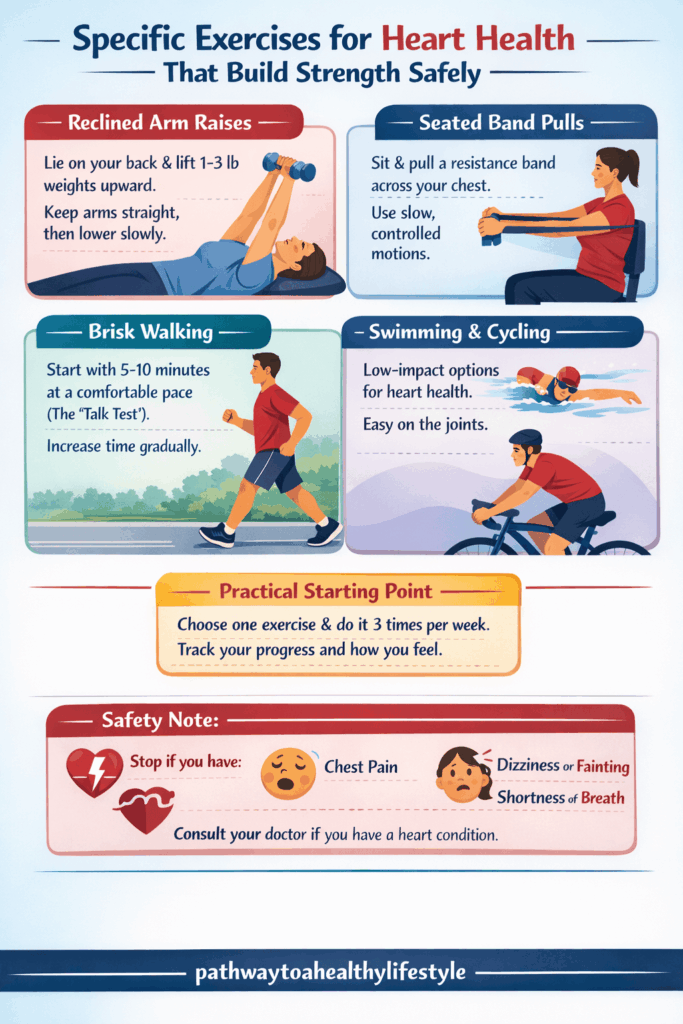
Resistance band exercises performed while seated also rank among effective natural ways to improve heart health. Pull the band across your chest in slow, rhythmic motions, focusing on controlled breathing throughout each movement.
Walking remains one of the most accessible exercises for heart health. Begin with 5-10 minute sessions at a comfortable pace where you can hold a conversation (the “talk test”). Gradually increase duration as your body adapts. Swimming and light cycling provide similar benefits with reduced joint stress.
Resistance band exercises performed while seated also rank among effective natural ways to improve heart health. Pull the band across your chest in slow, rhythmic motions, focusing on controlled breathing throughout each movement.
Walking remains one of the most accessible exercises for heart health. Begin with 5-10 minute sessions at a comfortable pace where you can hold a conversation (the “talk test”). Gradually increase duration as your body adapts. Swimming and light cycling provide similar benefits with reduced joint stress.
Practical Starting Point: Choose one exercise and commit to three sessions weekly. Track how you feel during and after each session to monitor your body’s response.
Safety Note: If you experience chest pain, dizziness, fainting, or unusual shortness of breath during exercise, stop immediately and seek medical guidance. Always consult your doctor before starting a new exercise program if you have a diagnosed heart condition.
Possible Warning Signs That Require Medical Evaluation
Recognizing potential indicators of cardiac concerns allows for early intervention. These symptoms can have many causes and do not confirm heart disease without professional evaluation. Pay attention to:
- Shortness of breath during minimal exertion or while resting
- Persistent fatigue despite adequate rest
- Heart palpitations or irregular heartbeat patterns
- Dizziness or lightheadedness when changing positions
- Swelling in ankles, feet, or legs indicating possible fluid retention
- Chest discomfort particularly during physical activity or emotional stress
- Difficulty breathing while lying flat or needing multiple pillows to sleep comfortably
Many people attribute these signs to normal aging or stress, missing valuable opportunities to address cardiovascular concerns early. If you experience any of these symptoms, schedule an evaluation with your healthcare provider promptly.
How Deep Breathing Supports Cardiovascular Function
Controlled breathing techniques represent one of the most accessible natural ways to improve heart health. Your heart depends on oxygen-rich blood to function optimally, and deliberate breathing practices can increase oxygenation while reducing cardiac workload.
Research on breathing and cardiovascular function demonstrates that controlled respiration improves heart rate variability—a marker of cardiovascular resilience. Deep, rhythmic breathing activates the parasympathetic nervous system, which lowers blood pressure and reduces stress on your circulatory system.
Practical Breathing Exercises
Diaphragmatic Breathing: Place one hand on your chest and one on your belly. Breathe in slowly through your nose for four counts, allowing your belly to rise while your chest remains relatively still. Exhale through your mouth for six counts. Practice for 5-10 minutes daily.
Box Breathing: Inhale for four counts, hold for four counts, exhale for four counts, hold for four counts. Repeat for five minutes. This technique proves particularly helpful for those experiencing anxiety-related palpitations.
These practices work best when performed outdoors or in well-ventilated spaces to maximize oxygenation.
The Brain-Heart-Gut Connection: Understanding Autonomic Regulation
Your cardiovascular system doesn’t operate in isolation—it maintains constant communication with your brain and digestive system through the vagus nerve, a major pathway of your autonomic nervous system. Physiological coordination improves through autonomic nervous system regulation, which influences heart rate, digestion, and stress response simultaneously.
When you practice calm, intentional breathing, you create what researchers call heart coherence—a smooth, rhythmic pattern in your heartbeat. This physiological state signals your nervous system to shift from stress response to recovery mode, reducing anxiety and improving mental clarity.
Your gut microbiome also plays a role in this connection. The beneficial bacteria in your digestive system produce neurotransmitters that influence mood and stress levels. When you nourish these microbes with whole foods, they support stable mood and reduced inflammation—both important factors in cardiovascular health.
This integrated system explains why approaches to strengthen the heart naturally address multiple body systems simultaneously. Gentle movement, mindful breathing, and wholesome nutrition create synergistic effects that benefit your entire physiology.
Diet and Lifestyle Adjustments That Support Cardiac Function
What you eat significantly impacts your ability to strengthen the heart naturally. A heart-healthy diet reduces inflammatory foods while increasing nutrient-dense options that support cardiovascular function.
Specific Heart-Healthy Foods to Incorporate
- Leafy greens (spinach, kale) provide nitrates that support healthy blood flow
- Fatty fish (salmon, mackerel) deliver omega-3 fatty acids that reduce inflammation
- Oats and whole grains offer soluble fiber that helps manage cholesterol
- Berries contain antioxidants that protect blood vessels
- Nuts and seeds (almonds, walnuts, flaxseeds) provide healthy fats and minerals
Learn more about nutrient-dense eating in our guides on blood-building foods and the benefits of a vegetarian diet.
Practical First Step: Replace processed snacks with a handful of almonds or a bowl of berries. Swap one refined grain daily (white bread, white pasta) with a whole grain alternative.
Understanding legumes nutrition and digestion can also help you incorporate heart-healthy plant proteins. For specific fruit benefits, explore our article on apples and bananas health benefits.
Additional Lifestyle Factors
Proper hydration with pure water supports blood volume and circulation. Aim for adequate rest between meals (3-4 hours) to allow your digestive system to complete its work without competing with other body functions for blood flow. Strategic eating windows or reduced meal frequency can enhance circulatory efficiency by allowing your body to focus on cellular repair.
Understanding Contributing Factors to Heart Disease
While genetic factors influence cardiovascular risk, lifestyle elements represent the most significant modifiable factors. Chronic stress, poor dietary patterns, and sedentary behavior contribute substantially to cardiac challenges over time.
Consistent overeating, particularly of processed foods, forces your heart to work harder to circulate blood to your digestive system. Stimulants like caffeine and nicotine create artificial stress on your cardiovascular system. Chronic emotional tension keeps your heart in a heightened state of activity.
While lifestyle changes are paramount, they work most effectively in partnership with medical care. These strategies complement professional treatment, especially for those with existing conditions. For comprehensive guidance, consult resources like the National Heart, Lung, and Blood Institute’s heart health guide.
Understanding respiratory physiology can deepen your knowledge of how breathing supports cardiovascular function. Teaching these principles early proves valuable—discover more about the benefits of exercise for children to establish lifelong healthy habits.
Safe Exercise Guidelines for Cardiac Wellness
Implementing a measured approach to physical activity remains essential when working to strengthen the heart naturally, particularly for those with existing cardiac concerns. Begin with short sessions of 5-10 minutes, carefully observing how your body responds before progressing.
Starting Safely:
- Choose low-impact activities (walking, swimming, reclined exercises)
- Use the talk test to gauge appropriate intensity
- Monitor for warning signs during and after exercise
- Rest adequately between sessions (at least one rest day between workouts)
- Track your progress in a simple journal
Gentle resistance exercises using light weights or bands while seated or lying down build supportive musculature without excessive strain. Gradually increase session duration by 2-3 minutes weekly as your tolerance improves.
Who This Guide Is For
This guide serves: Individuals seeking lifestyle-based cardiovascular support alongside professional medical care, those looking for evidence-based natural ways to improve heart health, and people wanting to establish sustainable heart-healthy habits.
Who requires medical supervision: Anyone with diagnosed heart disease, unexplained cardiac symptoms, recent cardiac events, or other chronic health conditions should discuss these strategies with their healthcare provider before implementation.
Frequently Asked Questions
How long does it take to strengthen the heart naturally with exercise?
Most people notice improvements in cardiovascular endurance within 4-6 weeks of consistent, moderate exercise. However, measurable physiological changes in heart efficiency may take 8-12 weeks of regular activity. Focus on consistency rather than intensity for sustainable results.
Can breathing exercises alone improve heart health?
While breathing exercises provide valuable support for cardiovascular function by reducing stress and improving oxygen efficiency, they work best when combined with regular physical activity and a heart-healthy diet. They serve as an important complement to, not a replacement for, other lifestyle interventions.
What foods should I avoid to support natural heart health?
Limit processed foods high in trans fats and excessive sodium, sugary beverages and refined carbohydrates, and excessive red meat consumption. Instead, emphasize whole foods, vegetables, lean proteins, and healthy fats from plant sources.
Is it safe to exercise if I have a heart condition?
Many people with heart conditions benefit significantly from appropriate exercise, but you must consult your healthcare provider before starting any new exercise program. They can help you determine safe intensity levels and appropriate activities based on your specific condition and current fitness level.
Conclusion
Learning to strengthen the heart naturally requires consistency, patience, and an integrated approach. Each intentional breath, mindful movement, and nourishing meal contributes to improved cardiovascular function. Your heart doesn’t need perfection—it responds to regular, appropriate challenge and proper recovery.
These evidence-based strategies work best when discussed with your healthcare provider and integrated into a comprehensive wellness plan. By combining safe exercises for heart health with proper nutrition, stress management, and adequate rest, you create the foundation for lasting cardiovascular wellness.
True progress begins not in fear, but in consistent, informed action.