
Sunlight for Gut Health: Improve Digestion, Energy & Mood Naturally
Do you often feel sluggish, bloated, or weighed down after meals—and wonder if there’s a natural way to fix it? What if the secret to better digestion, brighter mood, and renewed energy was already shining outside your window?
In this guide, you’ll learn the science behind sunlight’s effect on your gut and get a simple, actionable plan to use daily light exposure for better digestive health.
The truth is, sunlight for digestive health is more than just a wellness trend—it’s backed by modern research. Regular light exposure doesn’t just lift your spirits; it can boost metabolism, balance gut bacteria, and improve overall digestive comfort. Unfortunately, many people spend most of their days indoors, missing out on this free, natural therapy.
By the end of this post, you’ll have a clear, practical guide to using nature’s most powerful healer—the sun—to transform your digestive health from the inside out.
The Science Behind Sunlight and Digestive Health
If you’ve been feeling sluggish after meals or struggling with indigestion and low mood, the answer might be shining right above you. Sunlight isn’t just comforting—it’s deeply therapeutic. When your body doesn’t get enough light, digestion slows down, energy dips, and mood tends to follow. This is especially true for those dealing with issues like dyspepsia or liver congestion, where the body’s natural rhythm feels “off.”
Recent findings highlight how sunlight and digestive health are powerfully connected. Sunlight helps regulate your circadian rhythm—the body’s internal clock that controls digestion, metabolism, and hormone balance. In other words, getting enough sunlight for gut health doesn’t just brighten your day; it literally helps your system work more efficiently. For those experiencing digestive discomfort, exploring natural indigestion relief strategies can provide additional support.
Research published in the National Institutes of Health database confirms that light exposure influences metabolic processes and gut function. To understand how sunlight benefits extend far beyond digestion—boosting immunity, mood, and vitality—explore the comprehensive effects of sunlight on overall health. Together, these habits form a simple but powerful foundation for total well-being.
The 6 Key Benefits of Sunlight for Your Gut
The benefits of using sunlight for digestive health are delivered through multiple biological pathways. By understanding these mechanisms, you can more effectively harness this free resource. Below is a detailed overview of its core health benefits.
1. Enhances Vitamin D Production
When sunlight reaches the skin, it triggers the body’s natural ability to synthesize vitamin D. This essential nutrient supports calcium absorption and strengthens the gut lining—a barrier that keeps harmful substances from entering the bloodstream. Vitamin D deficiency has been linked to digestive discomfort and inflammatory conditions. Adequate sunlight exposure supports gut lining integrity, nutrient absorption, and immune balance—making it a critical link in using sunlight for digestive health. The result is better nutrient absorption, reduced inflammation, and a lower risk of digestive disorders.
2. Regulates Circadian Rhythms
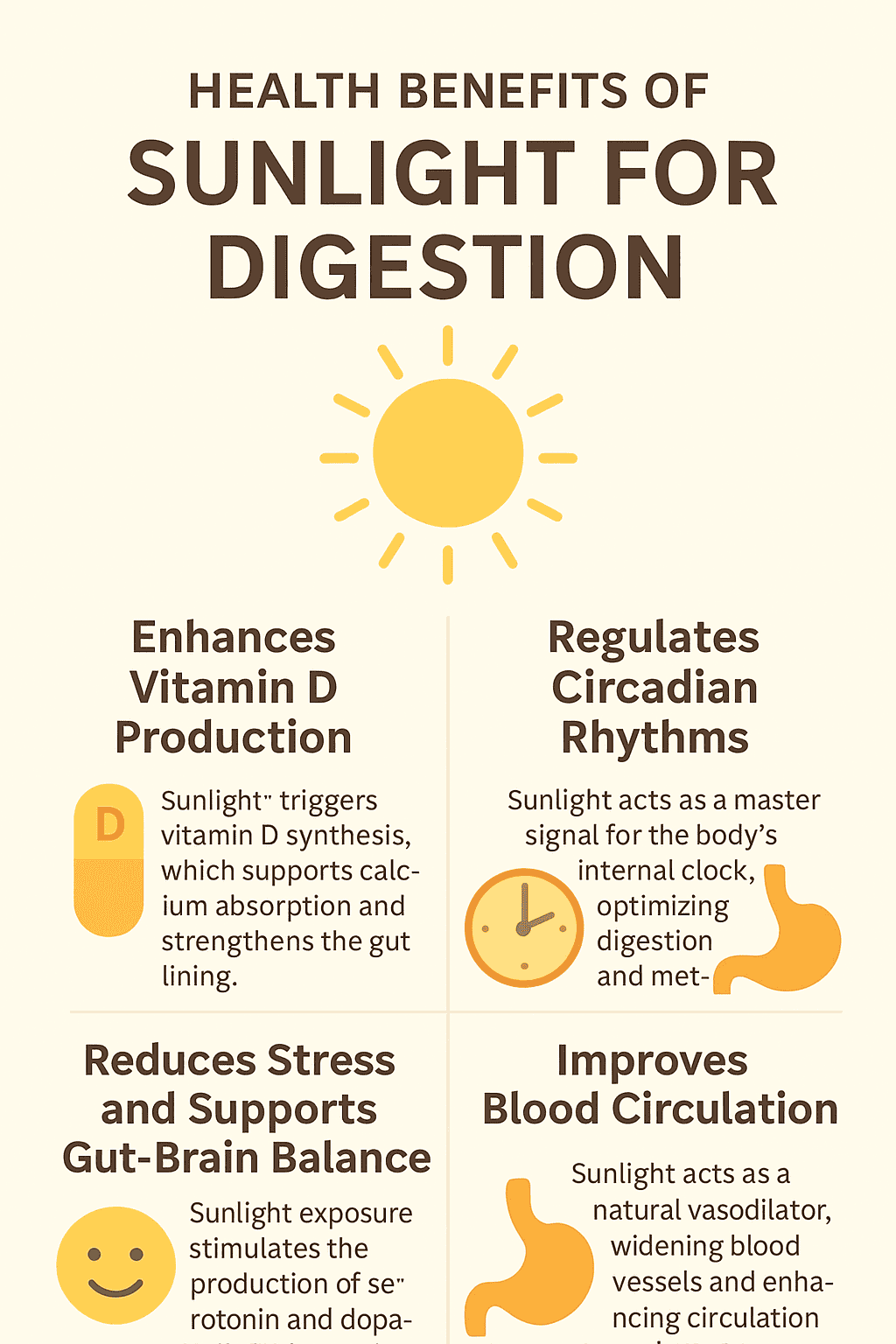
This is one of the most straightforward benefits of sunlight for gut health. Sunlight acts as a master signal for the body’s internal clock, ensuring that digestive processes occur at optimal times.
A well-tuned circadian system is a healthy system, and that’s precisely what consistent light exposure provides. Eating meals when the body is naturally prepared to digest food leads to improved metabolism and reduced indigestion. According to Dr. Ruscio’s research on sun exposure, proper light timing can significantly enhance digestive enzyme release.
3. Reduces Stress and Supports Gut-Brain Balance
The role of sunlight for digestive health extends to stress reduction, a leading cause of digestive discomfort like bloating and acid reflux. Exposure to sunlight stimulates serotonin and dopamine production—neurochemicals that calm the nervous system and enhance digestive efficiency. Pairing light exposure with deep breathing benefits for digestion creates a powerful gut-brain connection that promotes healing.
4. Improves Blood Circulation
Your digestive organs need strong blood flow to power the muscles and cells that break down food. Sunlight acts as a natural vasodilator, gently widening blood vessels to enhance circulation. This efficiently delivers oxygen and nutrients to your stomach, liver, and intestines while removing waste. This improved delivery system is a direct physical benefit of using sunlight for digestive health, preventing the sluggishness and bloating that come from a poorly circulated digestive tract.
5. Promotes Healthy Gut Microbiome
Research shows that sunlight may influence microbiota diversity—the community of beneficial bacteria that lives in the digestive tract. A diverse microbiome is linked to stronger immunity, improved digestion, and better nutrient absorption. The connection between sunlight and digestive health includes this microbial balance, which forms the foundation of optimal gut function.
6. Boosts Energy and Reduces Fatigue
Fatigue and poor digestion create a vicious cycle; low energy leads to inactivity, which slows digestion and worsens fatigue. Sunlight breaks this cycle. It naturally suppresses sleep hormones and boosts daytime energy, making you feel more alert and active. This increased vitality encourages movement, which in turn stimulates healthy digestion. Using sunlight for digestive health is a strategic way to boost your energy, break the cycle of sluggishness, and support a more active metabolism.
Light Therapy for Digestive Recovery: A Practical Guide
While natural sunlight is ideal, not everyone has access to it year-round. For those in low-light environments, light therapy lamps can simulate daylight and deliver similar benefits when used responsibly.
Morning Sunlight Exposure
Aim for 15–20 minutes outdoors in the morning to maximize the benefits of sunlight for digestive health. Choose soft, indirect light to avoid skin damage. Pair with light movement—learning proper walking technique for long walks can help you combine exercise with light exposure to stimulate circulation and digestive function.
Indoor Light Optimization
Keep curtains open and maximize natural light in living spaces. Choose bright, airy décor that reflects light for a more uplifting environment. Avoid dim, closed-off rooms, which can aggravate digestive issues. Understanding fresh air benefits for health complements your indoor optimization strategy, as ventilation and natural light work together to support wellness.
Historical Wisdom Meets Modern Science
Historical health practitioners often referred to sunlight as “nature’s physician,” recognizing its ability to restore vitality, circulation, and digestive strength—principles now supported by modern chronobiology and metabolic science. The verdict is clear: No greater mistake can be made than excluding the sun from your dwelling. If the benefits of daily sun exposure were as extensively understood as they deserve to be, we would see far more vibrant health and far fewer digestive complaints.
Your Practical Action Plan: Harnessing Sunlight Daily
Ready to implement what you’ve learned? Here’s your step-by-step action plan for using sunlight for digestive health:
Week 1: Establish Your Morning Routine
- Set an alarm 15 minutes earlier to catch morning sunlight
- Step outside or sit by a sunny window within 30 minutes of waking
- Notice how your energy and appetite respond throughout the day
Week 2: Optimize Your Environment
- Open curtains in your main living spaces
- Rearrange furniture to maximize light exposure during the day
- Consider adding reflective surfaces or lighter colors to enhance brightness
Week 3: Combine Movement and Light
- Take a 10-15 minute outdoor walk in natural light
- Practice gentle stretching or breathing exercises in sunny spots
- Track your digestive comfort and energy levels
Week 4: Fine-Tune Your Approach
- Adjust timing based on your schedule and climate
- Experiment with light therapy lamps on overcast days
- Maintain consistency to reinforce your circadian rhythm
Conclusion: Embrace Nature’s Healing Light
The evidence is clear: the strategic use of sunlight for digestive health offers more than just warmth and brightness—it leverages a profound biological relationship that supports energy, microbial balance, and mental well-being. By integrating sunlight exposure, mindful habits, and balanced nutrition, you can experience improved digestive comfort and vitality.
The connection between sunlight and digestive health represents one of nature’s most accessible healing modalities. By following the principles of nature cure, you align your body with its natural rhythms and unlock its inherent capacity for self-healing.
For more natural approaches to wellness, visit Pathway to a Healthy Lifestyle and discover proven methods to support a healthy gut—starting today.
Frequently Asked Questions (FAQ)
How quickly can I see improvements in my digestion from sun exposure?
A: While some people feel an immediate mood and energy boost, the benefits of sunlight for digestive health, like improved microbiome diversity and Vitamin D levels, often take a few weeks of consistent daily exposure to become noticeable.
Can I get the same benefits from a vitamin D supplement?
Supplements can help correct a deficiency, but they cannot fully replicate all the effects of sunlight on digestive health. Sunlight exposure regulates circadian rhythms and stimulates serotonin production in ways a pill cannot, offering a more holistic approach to gut wellness.
Is there a best time of day for sun exposure to aid digestion?
Yes, morning sunlight is particularly effective. It helps reset your circadian clock, which tells your body when to produce digestive enzymes. This morning ritual can lead to better metabolic function and fewer symptoms of indigestion throughout the day.
Does sunlight help digestion after meals?
Gentle sunlight exposure earlier in the day supports circadian rhythms, which improves digestive enzyme release and gut motility later during meals. Consistent morning light exposure creates the foundation for better digestive function throughout the entire day.