
How the Nervous System Links Mind Body and Spirit for Total Well-Being
Have you ever noticed how a stressful thought can trigger a racing heart, or how a deep breath instantly calms your entire being? This isn’t coincidence—it’s your nervous system at work, serving as the vital bridge connecting your thoughts, physical sensations, and deeper sense of purpose. The nervous system mind connection represents one of the most profound yet overlooked aspects of human health, orchestrating every moment of your experience from your first conscious thought each morning to your body’s automatic healing processes while you sleep.
Understanding this intricate relationship between mind and nervous system empowers you to take control of your well-being in ways you might never have imagined. In this comprehensive guide, you’ll discover how this biological communication network shapes your reality and learn practical strategies to harmonize your mental, physical, and spiritual health.
Understanding Your Nervous System as the Body’s Command Center
Your nervous system operates as an extraordinarily sophisticated network comprising your brain, spinal cord, and countless nerves branching throughout your entire body. This complex system constantly transmits millions of signals every second, governing everything from your heartbeat and digestion to your emotions, memories, and sense of connection to something greater than yourself, as the image below shows:
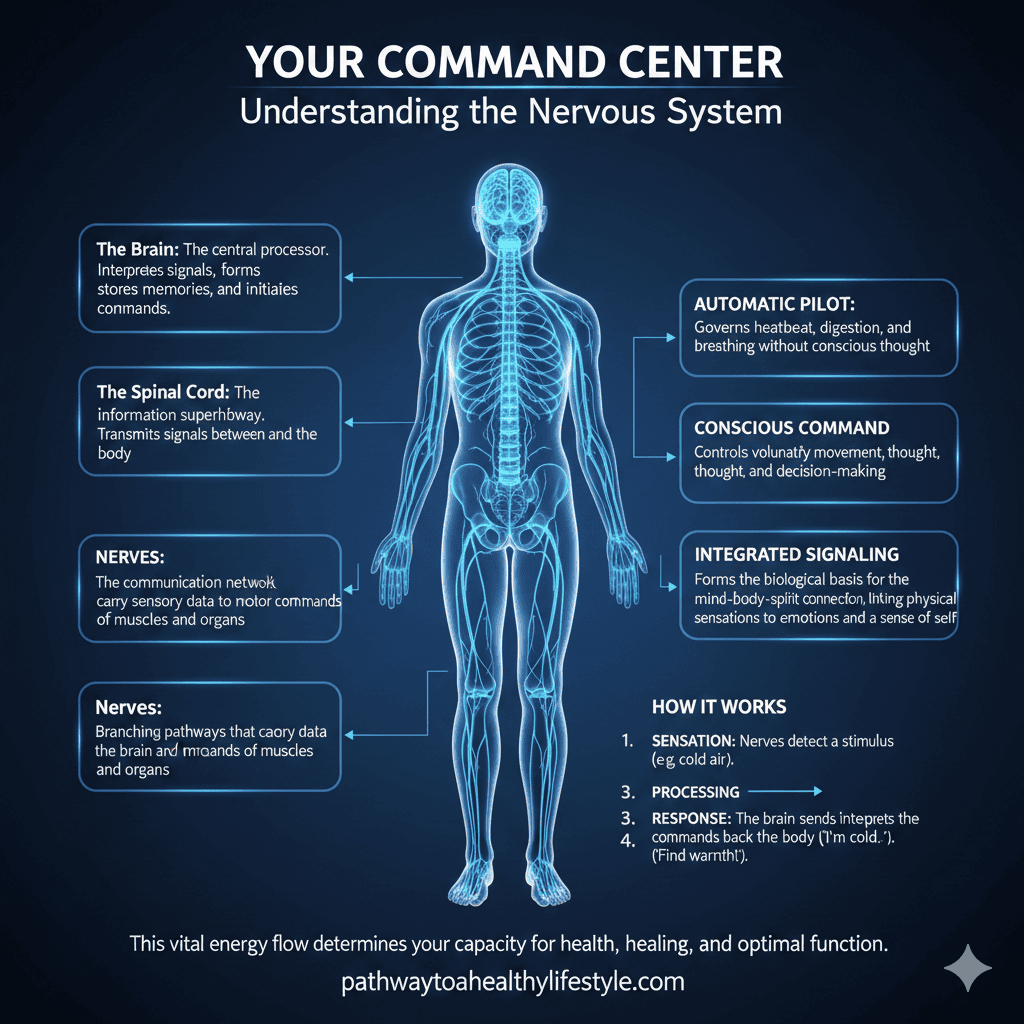
Think of your nervous system as the central hub of your mind body spirit integration. The brain rests protected within your skull, divided into regions that handle distinct functions—thinking, feeling, sensing, and controlling movement.
From the brain, the spinal cord extends downward through your backbone, sending large nerve branches that subdivide into increasingly smaller pathways reaching every cell and tissue.
This network operates through two types of nervous matter: gray matter, which generates the electrical impulses that power your body’s functions, and white matter, which conducts these signals to their destinations. When cold air touches your skin, sensory nerves immediately report this information to your brain, and your mind recognizes the need for warmth. Your brain then coordinates the voluntary movements needed to find a jacket or adjust the thermostat.
The efficiency of this vital energy flow directly impacts your overall health capacity and determines how effectively your body utilizes its energy resources for healing and optimal function.
How the Mind Influences Body and Spirit Through Neural Pathways
The nervous system mind connection creates a powerful one-way street where your thoughts and emotions trigger immediate physical responses throughout your body. When you experience stress—whether from work deadlines, relationship conflicts, or financial worries—your brain activates the sympathetic nervous system, commonly known as your “fight-or-flight” response.
This activation releases stress hormones like cortisol and adrenaline, which raise your heart rate, tense your muscles, and redirect blood flow away from digestion toward your limbs for quick action. Your breathing becomes shallow and rapid. Your pupils dilate. Your entire body shifts into high-alert mode, even when the “threat” is simply an overdue bill or a difficult conversation.
Conversely, thoughts of joy, gratitude, or calm activate the parasympathetic nervous system—your “rest-and-digest” mode—which slows your heart rate, deepens your breathing, relaxes your muscles, and enhances your body’s natural healing processes. This demonstrates how powerfully your mental state shapes your physical reality and spiritual sense of peace.
Chronic stress keeps you trapped in sympathetic activation, creating states of anxiety, fatigue, and disconnection from your deeper purpose. Meanwhile, cultivating calm through mindful control of thought allows peace and spiritual connection to flourish, creating the conditions for total well-being.
How Physical States Influence Mental and Spiritual Health
The relationship between mind and nervous system flows in both directions. Your body’s physical condition profoundly affects your mental clarity and emotional stability. When you experience chronic pain, poor circulation, digestive problems, or persistent fatigue, your nervous system remains on edge, unable to fully relax into the parasympathetic state necessary for healing and peace.
Physical tension literally holds emotional stress within your tissues. Research in somatic psychology reveals that unresolved trauma and emotional pain become encoded in your body’s nervous system, creating patterns of chronic muscle tension, shallow breathing, and heightened stress responses that persist long after the original event has passed.
This somatic connection explains why releasing physical tension through movement, massage, or breathwork often leads to unexpected emotional releases—tears, laughter, or profound relief. Your body remembers what your mind tries to forget, and your nervous system stores this information as protective patterns that can either support or sabotage your well-being.
Supporting your physical health through strengthening your heart naturally and other wellness practices creates the foundation for mental clarity and spiritual connection. When your body feels safe and cared for, your mind naturally quiets, and your spirit can emerge.
The Autonomic Nervous System: Voluntary and Involuntary Functions
Maintaining optimal nervous system health requires understanding the distinction between voluntary and involuntary nerve functions. Your voluntary nervous system controls conscious movements—walking, reaching, speaking, and all actions you intentionally direct. These nerves connect with the thinking, feeling, and choosing portions of your brain, allowing your conscious mind to direct your body’s actions.
Your involuntary or autonomic nervous system operates automatically, controlling breathing, heart rate, digestion, and countless other functions that continue whether you’re awake or asleep, focused or distracted. This system divides into the sympathetic (activating) and parasympathetic (calming) branches that work in dynamic balance to maintain your internal equilibrium.
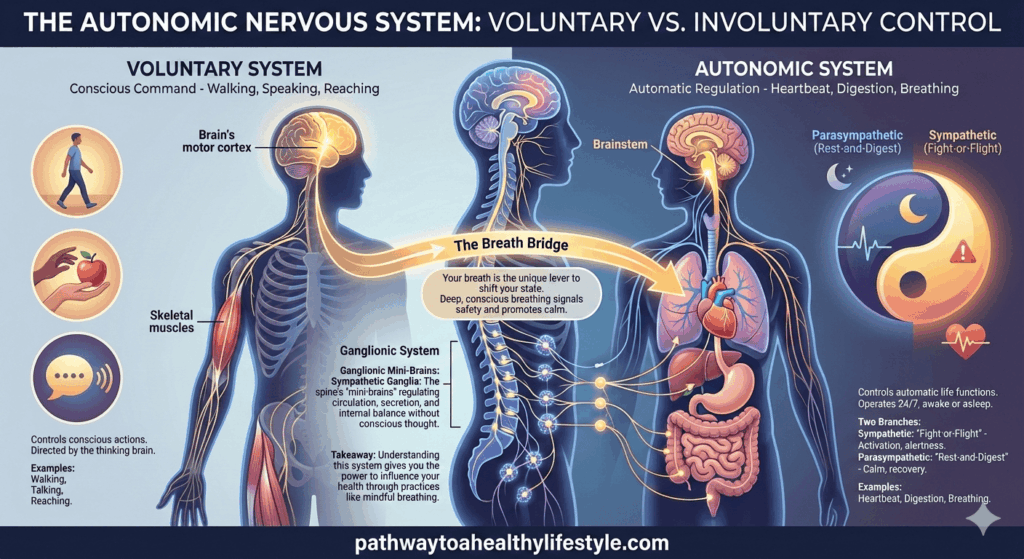
Interestingly, breathing bridges the voluntary and involuntary systems. While you breathe automatically, you can also consciously control your breath, making deep breathing practices one of the most accessible and powerful tools for influencing your nervous system state. By intentionally slowing and deepening your breath, you signal safety to your entire system, shifting from sympathetic activation to parasympathetic calm.
Another crucial component—the ganglionic or sympathetic nervous system—consists of small nerve clusters arranged along your spine that function like miniature brains. These ganglia regulate blood circulation, secretion, absorption, and most internal bodily functions that proceed without your conscious awareness or control, maintaining the complex balance required for life.
Linking Mind, Body, and Spirit Through Nervous System Balance
The nervous system mind connection serves as the sacred bridge linking your thoughts, physical sensations, and sense of purpose into a unified whole. When this system operates in balance, you experience what practitioners call mind body spirit integration—a state where your mental clarity, physical vitality, and spiritual awareness align harmoniously.
Your nervous system holds your body’s innate wisdom and healing capacity. According to research on mind-body-spirit wellness, when your nervous system achieves balance, you feel aligned, safe, and connected to your deeper purpose. Emotions flow naturally rather than becoming trapped as physical tension. Your body softens and opens. Your mind clears. Your spirit awakens to the present moment and your connection to something greater than yourself.
This integration doesn’t happen by accident. It requires conscious cultivation through practices that acknowledge the profound connection between mind and nervous system. When you tune into your body’s signals—noticing where you hold tension, how deeply you’re breathing, whether you feel grounded or scattered—you gain the information needed to support your nervous system and foster holistic well-being.
Practices to Harmonize Your Nervous System Mind Connection
Several evidence-based approaches work directly through the nervous system mind connection to promote balance and healing:
Mind-Body Techniques including deep breathing, meditation, yoga, and guided imagery help regulate your autonomic nervous system by consciously activating the parasympathetic response. These practices interrupt the stress cycle, reducing inflammation, lowering blood pressure, and creating the internal conditions for healing and spiritual connection.
Somatic Therapies such as AEDP (Accelerated Experiential Dynamic Psychotherapy) and IFS (Internal Family Systems) help release trauma stored in your body’s nervous system, fostering integration and what therapists call “self-leadership”—the ability to respond to life from your calm, wise center rather than reactive patterns.
Mindfulness and Body Awareness practices train you to notice your nervous system’s state throughout the day. Are you holding your breath? Clenching your jaw? Hunching your shoulders? These physical signals indicate sympathetic activation and provide opportunities to consciously shift toward calm through sitting meditation practice or simple breathing exercises.
Nature Exposure and Movement naturally regulate your nervous system. Walking in natural environments, stretching, dancing, or any enjoyable physical activity helps discharge stress hormones, circulate lymphatic fluid, and restore the dynamic balance between activation and rest that characterizes optimal nervous system function.
The beauty of these approaches lies in their accessibility. You don’t need expensive equipment or extensive training to begin supporting your mind-body-spirit health through your nervous system. Practicing silence for even a few minutes daily can profoundly shift your nervous system state and overall well-being.
Recognizing When Your Nervous System Needs Support
Your brain and nerves can suffer from both overwork and neglect, just as muscles do. When you engage in excessive mental activity—intense study, worry, or emotional stress—blood flows to the thinking portions of your brain to supply increased nourishment. Over time, this creates exhaustion of your nervous system’s energy reserves.
Signs that your nervous system mind connection has become imbalanced include persistent fatigue despite adequate rest, difficulty concentrating, heightened emotional reactivity, chronic muscle tension, digestive problems, sleep disturbances, and a sense of disconnection from your body and deeper purpose.
These symptoms indicate that your nervous system remains stuck in sympathetic activation, unable to access the restorative parasympathetic state necessary for healing. Recognizing these signs early allows you to intervene with supportive practices before minor imbalances become chronic conditions.
Remember that some individuals naturally possess more nervous system resilience than others, so a level of stress that exhausts one person might create only moderate strain for another. Honor your unique capacity and recognize your personal limits rather than comparing yourself to others.
Frequently Asked Questions
What is the nervous system mind connection?
The nervous system mind connection is the biological communication network linking your thoughts, emotions, and physical body through electrical signals transmitted via your brain, spinal cord, and nerves. This connection allows mental states to directly influence physical health while physical sensations shape your emotional and spiritual experiences, creating a holistic feedback loop essential for total well-being.
How does the mind and nervous system work together to affect my health?
The mind and nervous system work together through constant signal transmission—your thoughts trigger nerve impulses that create immediate physical responses like increased heart rate during stress or deep relaxation during calm moments. This bidirectional communication means chronic mental stress can deplete your nervous energy and weaken physical health, while practices like deep breathing and mindfulness can restore balance and activate your body’s natural healing processes.
Can I strengthen my nervous system mind connection naturally?
Yes, you strengthen your nervous system mind connection through consistent mind body spirit practices like deep breathing exercises, meditation, gentle movement, and somatic awareness. These techniques help regulate your autonomic nervous system by shifting you from the “fight-or-flight” sympathetic state to the “rest-and-digest” parasympathetic mode, building resilience and improving communication between your conscious mind and automatic bodily responses over time.
What are signs that my nervous system needs support?
Signs your nervous system needs support include persistent fatigue despite rest, chronic muscle tension, difficulty concentrating, heightened emotional reactivity, digestive problems, shallow breathing, and feeling disconnected from your body or deeper purpose. These symptoms indicate your mind and nervous system remain stuck in stress activation, and incorporating calming practices like mindfulness, nature exposure, or breathwork can help restore balance and promote mind-body-spirit harmony.
Conclusion: Embracing the Sacred Connection
Your nervous system represents far more than biological machinery—it’s the sacred organ of communication between your conscious mind, physical body, and spiritual essence. Every thought influences your physical state. Every physical sensation shapes your emotional experience. Every moment of presence deepens your connection to your mind body spirit wholeness.
By understanding and nurturing the nervous system mind connection, you empower yourself to create harmony between thought and action, emotion and physical response, spiritual awareness and bodily health. This integration forms the foundation of true holistic wellness and resilient well-being.
The journey toward nervous system balance is ongoing, not a destination you reach and abandon. Each day offers new opportunities to support this vital system through conscious breathing, mindful movement, adequate rest, nourishing relationships, and moments of stillness that allow your entire being to remember its natural state of peace.
Ready to deepen your understanding of holistic wellness? Explore our complete library of guides on conscious living, mental discipline, and natural health at Pathway to a Healthy Lifestyle.